Readings Newsletter
Become a Readings Member to make your shopping experience even easier.
Sign in or sign up for free!
You’re not far away from qualifying for FREE standard shipping within Australia
You’ve qualified for FREE standard shipping within Australia
The cart is loading…


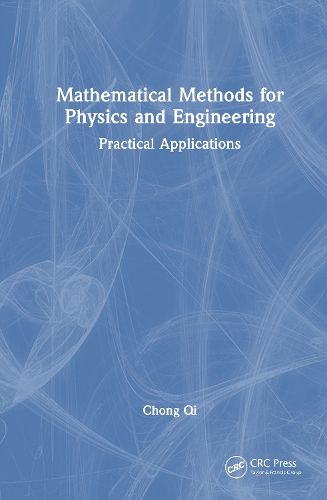
This book provides an accessible introduction to mathematical methods essential for physics, engineering, and modern computational analysis. Starting from foundational topics such as ordinary and partial differential equations, readers are then introduced to powerful techniques including Fourier and Laplace transforms, series expansions, matrix and eigenvalue methods, and numerical strategies such as iterative refinement.
"Mathematical Methods for Physics and Engineering: Practical Applications" emphasizes intuitive understanding and real-world applications: why the Lagrangian in classical mechanics takes the form T?V; how stability and sensitivity analysis connect to condition numbers and perturbation theory; and how matrix representations provide insight into optimisation and numerical stability.
Numerical examples and step-by-step derivations encourage active problem-solving and demonstrate how abstract methods translate into practical computations. It also highlights how these mathematical tools form the foundation of many techniques used in contemporary machine learning; from optimization algorithms and least-squares regression to spectral methods, kernel functions, and high-dimensional data analysis.
This is an ideal textbook for advanced undergraduate and graduate students studying mathematical methods for physics and/or engineering. Readers are equipped not only a versatile toolkit of methods, but also a deeper conceptual understanding of when, where, and why each tool is appropriate - empowering them to approach problems in physics and engineering.
Key features:
Provides a toolkit of mathematical methods Pedagogically focused, with homework problems included with each chapter Covers exciting topics including high-dimensional data analysis and machine learning
$9.00 standard shipping within Australia
FREE standard shipping within Australia for orders over $100.00
Express & International shipping calculated at checkout
Stock availability can be subject to change without notice. We recommend calling the shop or contacting our online team to check availability of low stock items. Please see our Shopping Online page for more details.
This book provides an accessible introduction to mathematical methods essential for physics, engineering, and modern computational analysis. Starting from foundational topics such as ordinary and partial differential equations, readers are then introduced to powerful techniques including Fourier and Laplace transforms, series expansions, matrix and eigenvalue methods, and numerical strategies such as iterative refinement.
"Mathematical Methods for Physics and Engineering: Practical Applications" emphasizes intuitive understanding and real-world applications: why the Lagrangian in classical mechanics takes the form T?V; how stability and sensitivity analysis connect to condition numbers and perturbation theory; and how matrix representations provide insight into optimisation and numerical stability.
Numerical examples and step-by-step derivations encourage active problem-solving and demonstrate how abstract methods translate into practical computations. It also highlights how these mathematical tools form the foundation of many techniques used in contemporary machine learning; from optimization algorithms and least-squares regression to spectral methods, kernel functions, and high-dimensional data analysis.
This is an ideal textbook for advanced undergraduate and graduate students studying mathematical methods for physics and/or engineering. Readers are equipped not only a versatile toolkit of methods, but also a deeper conceptual understanding of when, where, and why each tool is appropriate - empowering them to approach problems in physics and engineering.
Key features:
Provides a toolkit of mathematical methods Pedagogically focused, with homework problems included with each chapter Covers exciting topics including high-dimensional data analysis and machine learning
Search our extensive online catalogue.
