Readings Newsletter
Become a Readings Member to make your shopping experience even easier.
Sign in or sign up for free!
You’re not far away from qualifying for FREE standard shipping within Australia
You’ve qualified for FREE standard shipping within Australia
The cart is loading…


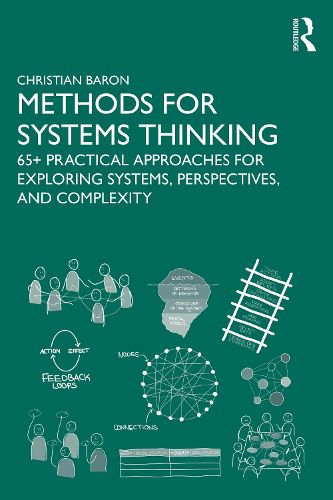
Methods for Systems Thinking is a practical workbook with more than 65 methods you can apply right away. It helps you explore complex systems, involve the right people, and respond effectively to change.
The QuickStart Guide shows you where to begin. You can start with the short theory section, use the 5M Methods Matrix to choose an approach, or jump straight to a method. Methods are organised by the 5M structure (Motivate, Meet, Map, Make and Manage) so you can quickly find what fits your purpose, whether clarifying goals, engaging stakeholders, mapping connections, shaping responses, or adapting over time.
Each method spans three pages and gives you a description, purpose, application, illustration, and step-by-step guidance. You also get tips for facilitation, debriefing, and variations. The focus is on action, turning reflection into results.
$9.00 standard shipping within Australia
FREE standard shipping within Australia for orders over $100.00
Express & International shipping calculated at checkout
Stock availability can be subject to change without notice. We recommend calling the shop or contacting our online team to check availability of low stock items. Please see our Shopping Online page for more details.
Methods for Systems Thinking is a practical workbook with more than 65 methods you can apply right away. It helps you explore complex systems, involve the right people, and respond effectively to change.
The QuickStart Guide shows you where to begin. You can start with the short theory section, use the 5M Methods Matrix to choose an approach, or jump straight to a method. Methods are organised by the 5M structure (Motivate, Meet, Map, Make and Manage) so you can quickly find what fits your purpose, whether clarifying goals, engaging stakeholders, mapping connections, shaping responses, or adapting over time.
Each method spans three pages and gives you a description, purpose, application, illustration, and step-by-step guidance. You also get tips for facilitation, debriefing, and variations. The focus is on action, turning reflection into results.
Search our extensive online catalogue.
