Readings Newsletter
Become a Readings Member to make your shopping experience even easier.
Sign in or sign up for free!
You’re not far away from qualifying for FREE standard shipping within Australia
You’ve qualified for FREE standard shipping within Australia
The cart is loading…


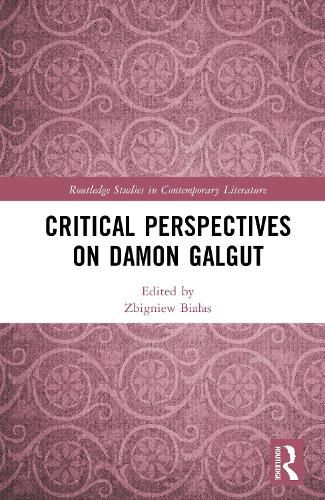
When Damon Galgut won the Man Booker Prize for his novel The Promise in 2021, he was already an established writer. He had previously been shortlisted for the Booker Prize in 2003 and 2010 and had been the author of eight novels and four plays, but before the success of The Promise, he remained relatively unknown to the general public outside South Africa. This volume is an attempt to engage an international set of specialists in postcolonial studies, South African literature, and, in several cases, established writers themselves, in a debate devoted entirely to Galgut's novels. This publication demonstrates that Galgut's work exceeds what readers tend to expect from post-apartheid white writing. Rather than offering the standard narratives of guilt, despair, and frustration, Galgut's novels, in dialogue with each other, and in dialogue with cultural and philosophical trends, propose a more intricate fabric. The writer's diagnosis of the human condition ultimately seems to transcend the constitutive turmoil and the crises, offering a vision of surprisingly and fascinatingly complex reality.
$9.00 standard shipping within Australia
FREE standard shipping within Australia for orders over $100.00
Express & International shipping calculated at checkout
Stock availability can be subject to change without notice. We recommend calling the shop or contacting our online team to check availability of low stock items. Please see our Shopping Online page for more details.
When Damon Galgut won the Man Booker Prize for his novel The Promise in 2021, he was already an established writer. He had previously been shortlisted for the Booker Prize in 2003 and 2010 and had been the author of eight novels and four plays, but before the success of The Promise, he remained relatively unknown to the general public outside South Africa. This volume is an attempt to engage an international set of specialists in postcolonial studies, South African literature, and, in several cases, established writers themselves, in a debate devoted entirely to Galgut's novels. This publication demonstrates that Galgut's work exceeds what readers tend to expect from post-apartheid white writing. Rather than offering the standard narratives of guilt, despair, and frustration, Galgut's novels, in dialogue with each other, and in dialogue with cultural and philosophical trends, propose a more intricate fabric. The writer's diagnosis of the human condition ultimately seems to transcend the constitutive turmoil and the crises, offering a vision of surprisingly and fascinatingly complex reality.
Search our extensive online catalogue.
