Readings Newsletter
Become a Readings Member to make your shopping experience even easier.
Sign in or sign up for free!
You’re not far away from qualifying for FREE standard shipping within Australia
You’ve qualified for FREE standard shipping within Australia
The cart is loading…


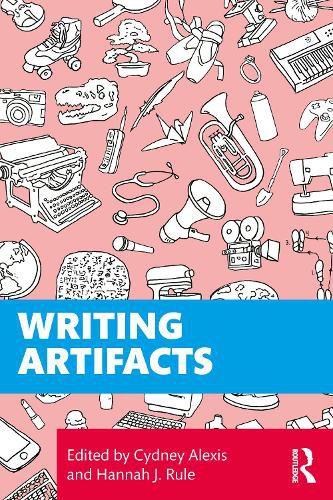
This book is an interdisciplinary collection of concise investigations into everyday artifacts that matter to writers and writing.
With the collection's 31 contributors and through the lens of material culture studies, the editors make a case that the study of writing is the study of artifacts. Each chapter centers on a distinct artifact, including an 1899 course notebook, the delete key, the graffiti spray can, indigenous paper, the Ouija board, and a retirement home noticeboard, as a means of exploring what each says about writing culture and writing lives. Together, the chapters show that, even if at first we don't understand how or why, the artifacts that populate our lives deserve close attention. The close attention paid to artifacts in this book demonstrates both the particularity of possessions (this Ouija board or my delete key) and their universality, as so many people's experiences with writing depend on similar possessions. In this way, each represents a moment in writing's story and timeline, while also living in many stories and timelines, begging for artifactual study. While readers will easily recognize some artifacts in this book as writing artifacts, others illustrate how 'writing' must be understood expansively, to capture the range of symbolic human expression and mirror the complex ways writing is experienced in people's lives, beyond the moment of inscription.
An accessible, cross-disciplinary archive of contemporary and historical writing artifacts that matter to writing practice, this book will be of interest to writers of all kinds, as well as students and scholars of writing in fields including Writing and Literacy Studies, Material and Popular Culture, Rhetoric, History, and Communication Studies.
$9.00 standard shipping within Australia
FREE standard shipping within Australia for orders over $100.00
Express & International shipping calculated at checkout
Stock availability can be subject to change without notice. We recommend calling the shop or contacting our online team to check availability of low stock items. Please see our Shopping Online page for more details.
This book is an interdisciplinary collection of concise investigations into everyday artifacts that matter to writers and writing.
With the collection's 31 contributors and through the lens of material culture studies, the editors make a case that the study of writing is the study of artifacts. Each chapter centers on a distinct artifact, including an 1899 course notebook, the delete key, the graffiti spray can, indigenous paper, the Ouija board, and a retirement home noticeboard, as a means of exploring what each says about writing culture and writing lives. Together, the chapters show that, even if at first we don't understand how or why, the artifacts that populate our lives deserve close attention. The close attention paid to artifacts in this book demonstrates both the particularity of possessions (this Ouija board or my delete key) and their universality, as so many people's experiences with writing depend on similar possessions. In this way, each represents a moment in writing's story and timeline, while also living in many stories and timelines, begging for artifactual study. While readers will easily recognize some artifacts in this book as writing artifacts, others illustrate how 'writing' must be understood expansively, to capture the range of symbolic human expression and mirror the complex ways writing is experienced in people's lives, beyond the moment of inscription.
An accessible, cross-disciplinary archive of contemporary and historical writing artifacts that matter to writing practice, this book will be of interest to writers of all kinds, as well as students and scholars of writing in fields including Writing and Literacy Studies, Material and Popular Culture, Rhetoric, History, and Communication Studies.
Search our extensive online catalogue.
