Readings Newsletter
Become a Readings Member to make your shopping experience even easier.
Sign in or sign up for free!
You’re not far away from qualifying for FREE standard shipping within Australia
You’ve qualified for FREE standard shipping within Australia
The cart is loading…


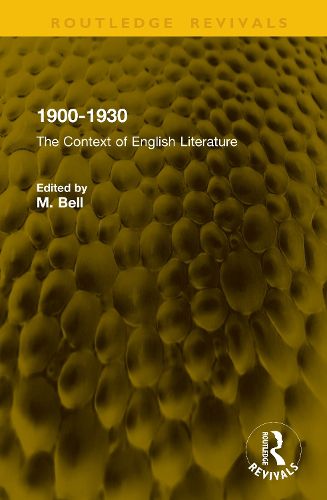
First published in 1980, 1900-1930 situates English literature firmly within its political, historical, and cultural landscape. This comprehensive volume explores the complementary philosophical developments that defined this transformative period.
Michael Bell and Cyril Barrett examine how literature and visual arts evolved beyond realist conventions, while R.A. Gekoski analyzes Freud's revolutionary model of the psyche and its profound impact on literary representations of human personality. Christopher Nash's contribution reveals how anthropological studies of myth and archaic cultures opened new perspectives on both literature and civilization itself.
Fred Reid provides an essential historical framework that extends beyond economic and political decision-making to encompass the diverse values that shaped alternative responses to the era's challenges. David Holdcroft's philosophical analysis highlights both the striking differences and fascinating affinities between disciplines during this period.
This volume is an indispensable resource for students and scholars of English literature seeking a nuanced understanding of this pivotal era.
$9.00 standard shipping within Australia
FREE standard shipping within Australia for orders over $100.00
Express & International shipping calculated at checkout
Stock availability can be subject to change without notice. We recommend calling the shop or contacting our online team to check availability of low stock items. Please see our Shopping Online page for more details.
First published in 1980, 1900-1930 situates English literature firmly within its political, historical, and cultural landscape. This comprehensive volume explores the complementary philosophical developments that defined this transformative period.
Michael Bell and Cyril Barrett examine how literature and visual arts evolved beyond realist conventions, while R.A. Gekoski analyzes Freud's revolutionary model of the psyche and its profound impact on literary representations of human personality. Christopher Nash's contribution reveals how anthropological studies of myth and archaic cultures opened new perspectives on both literature and civilization itself.
Fred Reid provides an essential historical framework that extends beyond economic and political decision-making to encompass the diverse values that shaped alternative responses to the era's challenges. David Holdcroft's philosophical analysis highlights both the striking differences and fascinating affinities between disciplines during this period.
This volume is an indispensable resource for students and scholars of English literature seeking a nuanced understanding of this pivotal era.
Search our extensive online catalogue.
