Readings Newsletter
Become a Readings Member to make your shopping experience even easier.
Sign in or sign up for free!
You’re not far away from qualifying for FREE standard shipping within Australia
You’ve qualified for FREE standard shipping within Australia
The cart is loading…


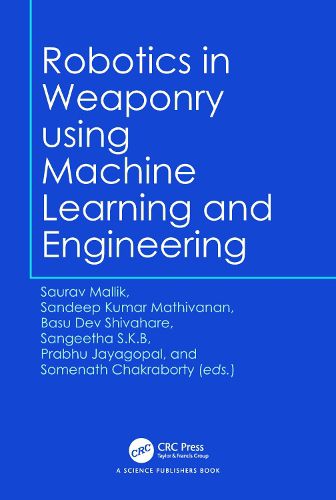
The integration ML with robotics and weaponry is revolutionizing mechanical engineering by enabling intelligent systems that can adapt, learn, and operate autonomously. In robotics, ML allows systems to process vast amounts of data from sensors to make real-time decisions. Robots, whether in industrial settings or autonomous vehicles, can navigate environments, recognize objects, and optimize tasks through reinforcement learning algorithms. In military applications, robotics combined with ML enhances autonomous weapon systems. Unmanned aerial vehicles (UAVs) and autonomous ground systems are increasingly utilized for surveillance, targeting, and even combat roles. These systems employ ML to improve target recognition, threat analysis, and adaptive decision-making in dynamic battle environments . This reduces human risk in conflict zones and can lead to more precise operational outcomes. Mechanical engineering plays a critical role in designing the physical systems that enable robotic mobility, structure, and function. Advanced mechanical systems integrate machine learning for predictive maintenance, fault diagnosis, and condition monitoring in weaponry and industrial robotics.
Mechanical engineers design robots with complex actuators, sensors, and control mechanisms that respond to real-time data processed by machine learning algorithms. The combination of robotics, ML, and mechanical engineering is driving the development of next-generation intelligent systems. These innovations not only improve automation but are also crucial for defence systems, manufacturing, and autonomous vehicle technologies. This synergy promises greater efficiency, adaptability, and autonomy in a range of applications.
Key Features:
Highlights Real-World Applications Explores Advanced AI Techniques Addresses Ethical and Security Concerns Equips Readers with Hands-On Knowledge Forecasts Future Technological Trends
$9.00 standard shipping within Australia
FREE standard shipping within Australia for orders over $100.00
Express & International shipping calculated at checkout
Stock availability can be subject to change without notice. We recommend calling the shop or contacting our online team to check availability of low stock items. Please see our Shopping Online page for more details.
The integration ML with robotics and weaponry is revolutionizing mechanical engineering by enabling intelligent systems that can adapt, learn, and operate autonomously. In robotics, ML allows systems to process vast amounts of data from sensors to make real-time decisions. Robots, whether in industrial settings or autonomous vehicles, can navigate environments, recognize objects, and optimize tasks through reinforcement learning algorithms. In military applications, robotics combined with ML enhances autonomous weapon systems. Unmanned aerial vehicles (UAVs) and autonomous ground systems are increasingly utilized for surveillance, targeting, and even combat roles. These systems employ ML to improve target recognition, threat analysis, and adaptive decision-making in dynamic battle environments . This reduces human risk in conflict zones and can lead to more precise operational outcomes. Mechanical engineering plays a critical role in designing the physical systems that enable robotic mobility, structure, and function. Advanced mechanical systems integrate machine learning for predictive maintenance, fault diagnosis, and condition monitoring in weaponry and industrial robotics.
Mechanical engineers design robots with complex actuators, sensors, and control mechanisms that respond to real-time data processed by machine learning algorithms. The combination of robotics, ML, and mechanical engineering is driving the development of next-generation intelligent systems. These innovations not only improve automation but are also crucial for defence systems, manufacturing, and autonomous vehicle technologies. This synergy promises greater efficiency, adaptability, and autonomy in a range of applications.
Key Features:
Highlights Real-World Applications Explores Advanced AI Techniques Addresses Ethical and Security Concerns Equips Readers with Hands-On Knowledge Forecasts Future Technological Trends
Search our extensive online catalogue.
