Readings Newsletter
Become a Readings Member to make your shopping experience even easier.
Sign in or sign up for free!
You’re not far away from qualifying for FREE standard shipping within Australia
You’ve qualified for FREE standard shipping within Australia
The cart is loading…


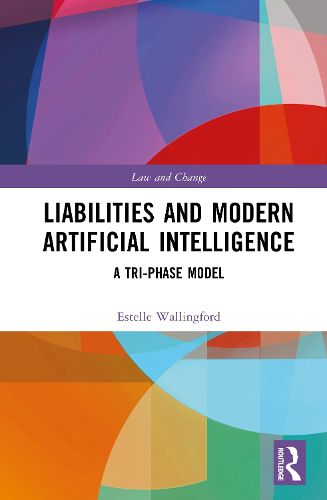
This book addresses how private law liability should be assigned in contexts where modern forms of AI are deployed.
AI as a technology holds the potential to radically improve global society, yet the pace of its advancement far outstrips the pace at which legal systems are responding. This book explores legal approaches to AI, how AI should be legally characterised, and proposes an overarching theoretical liability framework termed the Tri-Phase AI Liability Model. This framework is flexible in nature and considers the type of AI, the context in which it is deployed, who has the most control over the AI system and the capacity of a deployed AI. In response, this book brings greatly needed clarity to the evolving landscape of AI governance, aiding in resolving existing and emerging private law challenges.
This book is a timely response to the urgent need to resolve private law liabilities and will appeal to legal professionals, policy makers, and scholars looking to understand or contribute to the current and future governance of AI within private law.
$9.00 standard shipping within Australia
FREE standard shipping within Australia for orders over $100.00
Express & International shipping calculated at checkout
Stock availability can be subject to change without notice. We recommend calling the shop or contacting our online team to check availability of low stock items. Please see our Shopping Online page for more details.
This book addresses how private law liability should be assigned in contexts where modern forms of AI are deployed.
AI as a technology holds the potential to radically improve global society, yet the pace of its advancement far outstrips the pace at which legal systems are responding. This book explores legal approaches to AI, how AI should be legally characterised, and proposes an overarching theoretical liability framework termed the Tri-Phase AI Liability Model. This framework is flexible in nature and considers the type of AI, the context in which it is deployed, who has the most control over the AI system and the capacity of a deployed AI. In response, this book brings greatly needed clarity to the evolving landscape of AI governance, aiding in resolving existing and emerging private law challenges.
This book is a timely response to the urgent need to resolve private law liabilities and will appeal to legal professionals, policy makers, and scholars looking to understand or contribute to the current and future governance of AI within private law.
Search our extensive online catalogue.
