Readings Newsletter
Become a Readings Member to make your shopping experience even easier.
Sign in or sign up for free!
You’re not far away from qualifying for FREE standard shipping within Australia
You’ve qualified for FREE standard shipping within Australia
The cart is loading…


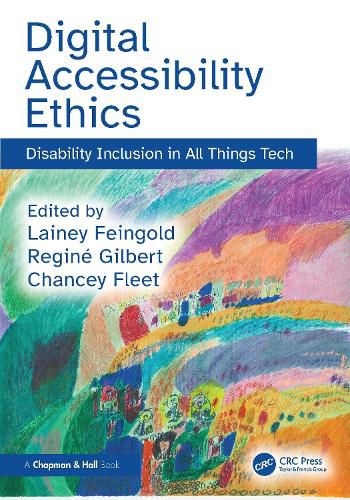
Digital Accessibility Ethics: Disability Inclusion in All Things Tech is a practical guide with an urgent goal: to help end tech exclusion of 1.3 billion people across the world with disabilities.
This book introduces the first Digital Accessibility Ethics Framework - an action-oriented, three-part tool designed to influence, change, and disrupt patterns of exclusion with values, actions, and questions. Thirty-nine disabled and nondisabled authors from ten countries and one commonwealth apply this framework across technologies, sectors, and countries.
The editors and authors - with over 600 years of combined accessibility and disability advocacy experience - aim to build a world that recognizes disabled people's right to fully participate in every facet of digital life and to offer organizations an ethics lens to help eliminate the financial, legal, privacy, security, health and safety, and other risks and harms of disability exclusion. Through stories, recommendations, strategies, and other guidance, this book looks at a wide range of topics through a digital accessibility ethics lens: from gaming, hackathons, design, and burnout to procurement, AI, healthcare, cybersecurity, and more. It is for technologists, educators, students, marketers, policy makers, lawyers, and everyone who believes in a digital world for all of us.
As the world grows more digital, as AI is marketed everywhere, and as the number of people with disabilities expands, there has never been a more crucial time to expose, explore, and act at the intersection of ethics, disability, and digital accessibility. Digital Accessibility Ethics: Disability Inclusion in All Things Tech offers a roadmap to show us the way.
$9.00 standard shipping within Australia
FREE standard shipping within Australia for orders over $100.00
Express & International shipping calculated at checkout
Stock availability can be subject to change without notice. We recommend calling the shop or contacting our online team to check availability of low stock items. Please see our Shopping Online page for more details.
Digital Accessibility Ethics: Disability Inclusion in All Things Tech is a practical guide with an urgent goal: to help end tech exclusion of 1.3 billion people across the world with disabilities.
This book introduces the first Digital Accessibility Ethics Framework - an action-oriented, three-part tool designed to influence, change, and disrupt patterns of exclusion with values, actions, and questions. Thirty-nine disabled and nondisabled authors from ten countries and one commonwealth apply this framework across technologies, sectors, and countries.
The editors and authors - with over 600 years of combined accessibility and disability advocacy experience - aim to build a world that recognizes disabled people's right to fully participate in every facet of digital life and to offer organizations an ethics lens to help eliminate the financial, legal, privacy, security, health and safety, and other risks and harms of disability exclusion. Through stories, recommendations, strategies, and other guidance, this book looks at a wide range of topics through a digital accessibility ethics lens: from gaming, hackathons, design, and burnout to procurement, AI, healthcare, cybersecurity, and more. It is for technologists, educators, students, marketers, policy makers, lawyers, and everyone who believes in a digital world for all of us.
As the world grows more digital, as AI is marketed everywhere, and as the number of people with disabilities expands, there has never been a more crucial time to expose, explore, and act at the intersection of ethics, disability, and digital accessibility. Digital Accessibility Ethics: Disability Inclusion in All Things Tech offers a roadmap to show us the way.
Search our extensive online catalogue.
