Readings Newsletter
Become a Readings Member to make your shopping experience even easier.
Sign in or sign up for free!
You’re not far away from qualifying for FREE standard shipping within Australia
You’ve qualified for FREE standard shipping within Australia
The cart is loading…


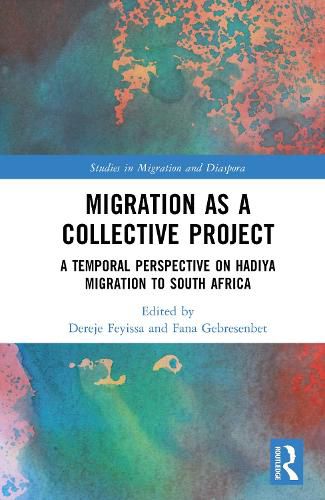
This book seeks to broaden the conversation in migration studies by incorporating a collective perspective, as illustrated by the case study of Hadiya migration from Southern Ethiopia to South Africa.
Rather than presenting individualism and communalism as opposing forces, the authors conceptualize them as points on a continuum. At the starting end, communal ties are crucial, particularly in the early stages of the Hadiya migration, but over time, as migrants accumulate wealth and encounter increasing competition in South Africa's informal economy, individualism begins to take precedence, gradually unravelling the social fabric that initially supported collective success. This temporal perspective offers a more nuanced understanding of migration, revealing how it transitions from a collective endeavour to an increasingly individualistic one as circumstances evolve.
A convincing and compelling new volume which highlights the transformation of the migration process from a predominantly collectivist endeavour to one characterized by increased individualism, and the resulting need for a temporal perspective to avoid the pitfalls of a binary framework, it will appeal to scholars and students of migration studies, development studies, sociology and African studies.
$9.00 standard shipping within Australia
FREE standard shipping within Australia for orders over $100.00
Express & International shipping calculated at checkout
Stock availability can be subject to change without notice. We recommend calling the shop or contacting our online team to check availability of low stock items. Please see our Shopping Online page for more details.
This book seeks to broaden the conversation in migration studies by incorporating a collective perspective, as illustrated by the case study of Hadiya migration from Southern Ethiopia to South Africa.
Rather than presenting individualism and communalism as opposing forces, the authors conceptualize them as points on a continuum. At the starting end, communal ties are crucial, particularly in the early stages of the Hadiya migration, but over time, as migrants accumulate wealth and encounter increasing competition in South Africa's informal economy, individualism begins to take precedence, gradually unravelling the social fabric that initially supported collective success. This temporal perspective offers a more nuanced understanding of migration, revealing how it transitions from a collective endeavour to an increasingly individualistic one as circumstances evolve.
A convincing and compelling new volume which highlights the transformation of the migration process from a predominantly collectivist endeavour to one characterized by increased individualism, and the resulting need for a temporal perspective to avoid the pitfalls of a binary framework, it will appeal to scholars and students of migration studies, development studies, sociology and African studies.
Search our extensive online catalogue.
