Readings Newsletter
Become a Readings Member to make your shopping experience even easier.
Sign in or sign up for free!
You’re not far away from qualifying for FREE standard shipping within Australia
You’ve qualified for FREE standard shipping within Australia
The cart is loading…


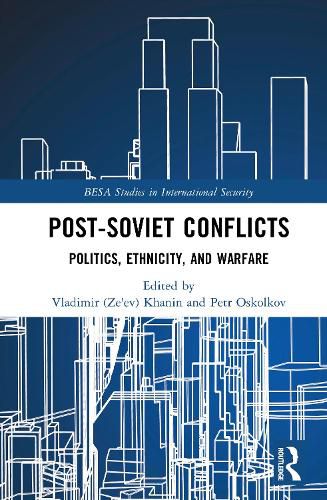
This edited book offers an overview of how political structures, ethnic tensions, and emerging warfare continue to shape the region within the borders of the former Soviet Union.
Bringing together Israeli, European, and US scholars, the volume traces decades of conflict dynamics across Eastern Europe, South Caucasus, and Central Asia, with particular emphasis on the implications of recent regional and global geopolitical developments, such as the Russian-Ukrainian war. Through detailed case studies and theoretical observations, the chapters illustrate the intersections between nationalism, identity politics, inter-ethnic grievances, state-building, sovereignty-seeking, and battlefield dynamics. Combining both macro- and micro-levels of analysis, the chapters draw attention not only to political interactions between governments and countries but also to a more individual and socio-oriented understanding of conflict effects. Overall, the volume demonstrates how old grievances, new geopolitical developments, and contested national narratives continue to fuel instability across post-Soviet states.
This book will be of much interest to students of Post-Soviet Studies, War and Conflict Studies, Eastern European Studies and International Relations.
$9.00 standard shipping within Australia
FREE standard shipping within Australia for orders over $100.00
Express & International shipping calculated at checkout
Stock availability can be subject to change without notice. We recommend calling the shop or contacting our online team to check availability of low stock items. Please see our Shopping Online page for more details.
This edited book offers an overview of how political structures, ethnic tensions, and emerging warfare continue to shape the region within the borders of the former Soviet Union.
Bringing together Israeli, European, and US scholars, the volume traces decades of conflict dynamics across Eastern Europe, South Caucasus, and Central Asia, with particular emphasis on the implications of recent regional and global geopolitical developments, such as the Russian-Ukrainian war. Through detailed case studies and theoretical observations, the chapters illustrate the intersections between nationalism, identity politics, inter-ethnic grievances, state-building, sovereignty-seeking, and battlefield dynamics. Combining both macro- and micro-levels of analysis, the chapters draw attention not only to political interactions between governments and countries but also to a more individual and socio-oriented understanding of conflict effects. Overall, the volume demonstrates how old grievances, new geopolitical developments, and contested national narratives continue to fuel instability across post-Soviet states.
This book will be of much interest to students of Post-Soviet Studies, War and Conflict Studies, Eastern European Studies and International Relations.
Search our extensive online catalogue.
