Readings Newsletter
Become a Readings Member to make your shopping experience even easier.
Sign in or sign up for free!
You’re not far away from qualifying for FREE standard shipping within Australia
You’ve qualified for FREE standard shipping within Australia
The cart is loading…


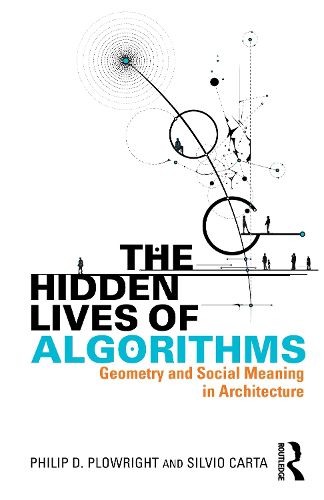
When we draw basic geometric forms - lines, circles, points - to describe the possible future shape of our buildings and our cities, do we consider what predetermined social interactions are embedded in those forms?
Though simple, this question is often overlooked. As generative and analytic algorithms increasingly automate the design of our built environment, the power of basic geometrical notation to affect social meanings becomes both more powerful and more elusive. This book examines how the geometric outcomes of spatialised algorithmic operations influence more complex human experiences of accessibility, belonging, and identity as well as shape the dynamics of equity, connectivity, privacy, and power in architectural and urban spaces.
The Hidden Lives of Algorithms draws insights from architecture, urban studies, computer science, design theory, cognitive science, human geography, environmental psychology, and social theory to investigate the intersection of geometry, computation, and social meaning. Grounded in embodied cognition, the book connects fundamental thinking structures to our spatial experience and examines how algorithms operationalise these ideas in real-world design. This book challenges designers to look beyond technical implementation, urging a critical awareness of how computational processes can reinforce or reimagine the social fabric of our shared spaces.
$9.00 standard shipping within Australia
FREE standard shipping within Australia for orders over $100.00
Express & International shipping calculated at checkout
Stock availability can be subject to change without notice. We recommend calling the shop or contacting our online team to check availability of low stock items. Please see our Shopping Online page for more details.
When we draw basic geometric forms - lines, circles, points - to describe the possible future shape of our buildings and our cities, do we consider what predetermined social interactions are embedded in those forms?
Though simple, this question is often overlooked. As generative and analytic algorithms increasingly automate the design of our built environment, the power of basic geometrical notation to affect social meanings becomes both more powerful and more elusive. This book examines how the geometric outcomes of spatialised algorithmic operations influence more complex human experiences of accessibility, belonging, and identity as well as shape the dynamics of equity, connectivity, privacy, and power in architectural and urban spaces.
The Hidden Lives of Algorithms draws insights from architecture, urban studies, computer science, design theory, cognitive science, human geography, environmental psychology, and social theory to investigate the intersection of geometry, computation, and social meaning. Grounded in embodied cognition, the book connects fundamental thinking structures to our spatial experience and examines how algorithms operationalise these ideas in real-world design. This book challenges designers to look beyond technical implementation, urging a critical awareness of how computational processes can reinforce or reimagine the social fabric of our shared spaces.
Search our extensive online catalogue.
