Readings Newsletter
Become a Readings Member to make your shopping experience even easier.
Sign in or sign up for free!
You’re not far away from qualifying for FREE standard shipping within Australia
You’ve qualified for FREE standard shipping within Australia
The cart is loading…


This title is printed to order. This book may have been self-published. If so, we cannot guarantee the quality of the content. In the main most books will have gone through the editing process however some may not. We therefore suggest that you be aware of this before ordering this book. If in doubt check either the author or publisher’s details as we are unable to accept any returns unless they are faulty. Please contact us if you have any questions.
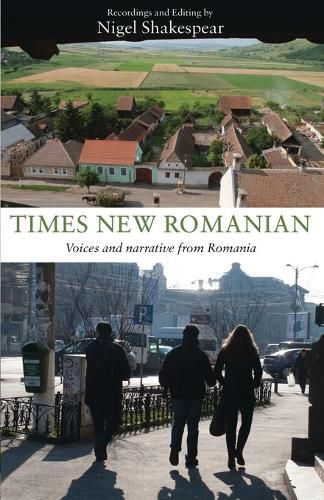
Living and working in Bucharest since 1996 Romanians would ask me 'What do you think of our country?' I found 38 Westerners making a life there and asked them to tell me how they found Romania and its people. This oral history, first published in 2014, comes from interviews with Western writers, social workers, travel guides, entrepreneurs, restaurateurs and NGO chartiy workers; some of them were married to Romanians. Their experience of life in Romania, in and beyond Bucharest, provides a wealth of stories, observations and perspectives that show commonalities like the beauty of Transylvania, the generous hospitality and humour of the people, the vivacity of Romanians and the challenges they face. Whilst Romania joined the European Union in 2006 it is an East European country whose post-communist legacy persists; there's endemic corruption, Byzantine bureaucracy, fear of the Securtitate, a politicised administration and a problem with trust outside their strong families and networks. There's a mix of Latin and Slav and minorities who struggle, Hungarians and Roma being the largest. There's superstition and spirituality, a generation gap and strong differences between urban and rural Romanians. There's fatalism and a paradox in a lack of national pride together with nationalist feelings. Romania engenders strong feelings about the country and despite the ups and downs these foreigners are still there which speaks for the attraction of the country. Find out how things work or don't and ideas as to where to go and what to look for.
$9.00 standard shipping within Australia
FREE standard shipping within Australia for orders over $100.00
Express & International shipping calculated at checkout
Stock availability can be subject to change without notice. We recommend calling the shop or contacting our online team to check availability of low stock items. Please see our Shopping Online page for more details.
This title is printed to order. This book may have been self-published. If so, we cannot guarantee the quality of the content. In the main most books will have gone through the editing process however some may not. We therefore suggest that you be aware of this before ordering this book. If in doubt check either the author or publisher’s details as we are unable to accept any returns unless they are faulty. Please contact us if you have any questions.
Living and working in Bucharest since 1996 Romanians would ask me 'What do you think of our country?' I found 38 Westerners making a life there and asked them to tell me how they found Romania and its people. This oral history, first published in 2014, comes from interviews with Western writers, social workers, travel guides, entrepreneurs, restaurateurs and NGO chartiy workers; some of them were married to Romanians. Their experience of life in Romania, in and beyond Bucharest, provides a wealth of stories, observations and perspectives that show commonalities like the beauty of Transylvania, the generous hospitality and humour of the people, the vivacity of Romanians and the challenges they face. Whilst Romania joined the European Union in 2006 it is an East European country whose post-communist legacy persists; there's endemic corruption, Byzantine bureaucracy, fear of the Securtitate, a politicised administration and a problem with trust outside their strong families and networks. There's a mix of Latin and Slav and minorities who struggle, Hungarians and Roma being the largest. There's superstition and spirituality, a generation gap and strong differences between urban and rural Romanians. There's fatalism and a paradox in a lack of national pride together with nationalist feelings. Romania engenders strong feelings about the country and despite the ups and downs these foreigners are still there which speaks for the attraction of the country. Find out how things work or don't and ideas as to where to go and what to look for.
Search our extensive online catalogue.
