Readings Newsletter
Become a Readings Member to make your shopping experience even easier.
Sign in or sign up for free!
You’re not far away from qualifying for FREE standard shipping within Australia
You’ve qualified for FREE standard shipping within Australia
The cart is loading…


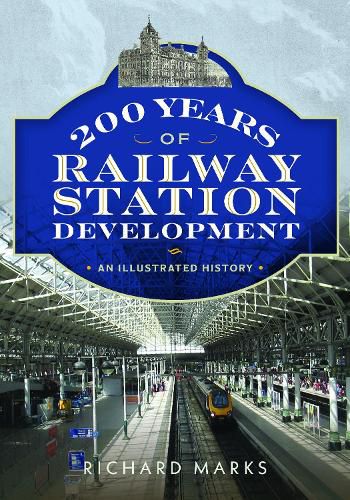
The railway station first appeared in Britain when the new railway companies began to carry passengers as well as the freight for which they had originally been built. From humble beginnings behind the bar in the local pub, to state of the art travel hubs, Britain's railway stations have become a key part of society, even impacting how time is measured. As Britain's railway network grew, so did it's stations. Competing companies arrived in the same town and built magnificent structures to attract passengers to their lines over those of their competitors. Architectural styles were as varied as the companies who commissioned them, although all were built to provide a feeling of permanence and dynamism to the local communities they served. In this new introduction to the history of Britain's railway stations, industrial and railway historian Dr Richard Marks examines why railway stations were built where and how they were. The impact of railway politics, rail heading and competition is clearly explained, to provide a new perspective on the railway station. Perhaps more than just a travel hub, the railway station was also place of sorrowful separations, and joyful reunions, new opportunity or departure to war something which is examined throughout the new book. The evolution of railway stations, be they magnificent city centre statements or humble branch line or light railway facilities, is a fascinating and complex subject to which this new volume aims to provide a readable introduction. AUTHOR: Dr Richard Marks is an experienced published historian, researcher, lecturer and tutor with expertise in manufacturing and social history, the Industrial Revolution, Victorian Britain, railway, and military history. He has authored a number of history books and has further books in progress including a series of heritage travel guides. Richard has a background in technology and business, and has worked as a consulting historian for various museum exhibitions. Richard's PhD looked at the relationship between railways and the industrial and economic development of rural counties in the 19th Century. He is known for his engaging communication style, making complex topics accessible to all audiences. 20 colour, 80 b/w illustrations
$9.00 standard shipping within Australia
FREE standard shipping within Australia for orders over $100.00
Express & International shipping calculated at checkout
Stock availability can be subject to change without notice. We recommend calling the shop or contacting our online team to check availability of low stock items. Please see our Shopping Online page for more details.
The railway station first appeared in Britain when the new railway companies began to carry passengers as well as the freight for which they had originally been built. From humble beginnings behind the bar in the local pub, to state of the art travel hubs, Britain's railway stations have become a key part of society, even impacting how time is measured. As Britain's railway network grew, so did it's stations. Competing companies arrived in the same town and built magnificent structures to attract passengers to their lines over those of their competitors. Architectural styles were as varied as the companies who commissioned them, although all were built to provide a feeling of permanence and dynamism to the local communities they served. In this new introduction to the history of Britain's railway stations, industrial and railway historian Dr Richard Marks examines why railway stations were built where and how they were. The impact of railway politics, rail heading and competition is clearly explained, to provide a new perspective on the railway station. Perhaps more than just a travel hub, the railway station was also place of sorrowful separations, and joyful reunions, new opportunity or departure to war something which is examined throughout the new book. The evolution of railway stations, be they magnificent city centre statements or humble branch line or light railway facilities, is a fascinating and complex subject to which this new volume aims to provide a readable introduction. AUTHOR: Dr Richard Marks is an experienced published historian, researcher, lecturer and tutor with expertise in manufacturing and social history, the Industrial Revolution, Victorian Britain, railway, and military history. He has authored a number of history books and has further books in progress including a series of heritage travel guides. Richard has a background in technology and business, and has worked as a consulting historian for various museum exhibitions. Richard's PhD looked at the relationship between railways and the industrial and economic development of rural counties in the 19th Century. He is known for his engaging communication style, making complex topics accessible to all audiences. 20 colour, 80 b/w illustrations
Search our extensive online catalogue.
