Readings Newsletter
Become a Readings Member to make your shopping experience even easier.
Sign in or sign up for free!
You’re not far away from qualifying for FREE standard shipping within Australia
You’ve qualified for FREE standard shipping within Australia
The cart is loading…


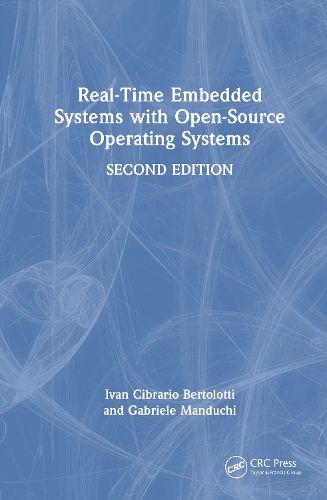
This book aims to provide readers with hands-on knowledge about real-time operating systems and their possible application in the embedded systems domain to streamline, simplify, and make software development more efficient, without requiring any significant previous experience with them. A thorough presentation of operating system-based programming techniques is especially important because they enjoy an ever-increasing popularity in the embedded systems domain but are often misunderstood, because they still lack comprehensive support in the scientific and technical literature.
The book analyzes in detail three realistic case studies of increasing complexity, of which the first one requires only a commonly available PC or laptop, while the other two involve low-cost, open-source hardware platforms readily available to the majority of readers. They serve as starting points and running examples while introducing theoretical concepts, as well as real-time operating systems' operations and interfaces. A set of exercises and their solutions completes the book, to enable readers to self-assess their knowledge as they proceed. Moreover, the source code developed for the case studies is freely available for download and further experimentation.
Provides hands-on description of the most important real-time operating system concepts Includes case studies of practical interest to experiment with while reading the book Provides an in-depth, but accessible presentation of real-time scheduling theory A balanced mix of operating system theory, exercises, and case studies in a single book The use cases involve inexpensive hardware boards readily available on the market
Together, the topics covered by this book help embedded system designers understand benefits and shortcomings of real-time operating systems and then decide whether it may be worth adopting one of them for their next project instead of relying on more traditional, but less powerful, techniques. At the same time, students will acquire all the knowledge and skills they need to take part in real-world embedded software development without sacrificing a proper theoretical foundation. In this context, the case studies play the crucial role of underlining the strong relationship between operating system theory and application, along with the relevance of theoretical concept in day-to-day project design and implementation.
$9.00 standard shipping within Australia
FREE standard shipping within Australia for orders over $100.00
Express & International shipping calculated at checkout
Stock availability can be subject to change without notice. We recommend calling the shop or contacting our online team to check availability of low stock items. Please see our Shopping Online page for more details.
This book aims to provide readers with hands-on knowledge about real-time operating systems and their possible application in the embedded systems domain to streamline, simplify, and make software development more efficient, without requiring any significant previous experience with them. A thorough presentation of operating system-based programming techniques is especially important because they enjoy an ever-increasing popularity in the embedded systems domain but are often misunderstood, because they still lack comprehensive support in the scientific and technical literature.
The book analyzes in detail three realistic case studies of increasing complexity, of which the first one requires only a commonly available PC or laptop, while the other two involve low-cost, open-source hardware platforms readily available to the majority of readers. They serve as starting points and running examples while introducing theoretical concepts, as well as real-time operating systems' operations and interfaces. A set of exercises and their solutions completes the book, to enable readers to self-assess their knowledge as they proceed. Moreover, the source code developed for the case studies is freely available for download and further experimentation.
Provides hands-on description of the most important real-time operating system concepts Includes case studies of practical interest to experiment with while reading the book Provides an in-depth, but accessible presentation of real-time scheduling theory A balanced mix of operating system theory, exercises, and case studies in a single book The use cases involve inexpensive hardware boards readily available on the market
Together, the topics covered by this book help embedded system designers understand benefits and shortcomings of real-time operating systems and then decide whether it may be worth adopting one of them for their next project instead of relying on more traditional, but less powerful, techniques. At the same time, students will acquire all the knowledge and skills they need to take part in real-world embedded software development without sacrificing a proper theoretical foundation. In this context, the case studies play the crucial role of underlining the strong relationship between operating system theory and application, along with the relevance of theoretical concept in day-to-day project design and implementation.
Search our extensive online catalogue.
