Readings Newsletter
Become a Readings Member to make your shopping experience even easier.
Sign in or sign up for free!
You’re not far away from qualifying for FREE standard shipping within Australia
You’ve qualified for FREE standard shipping within Australia
The cart is loading…


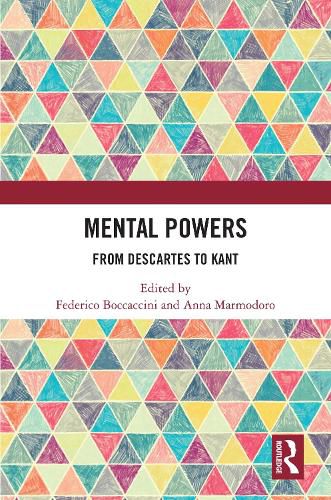
Scholars of the history of philosophy of mind have focused by and large on the early modern critique of the Aristotelian-scholastic theory of vegetative, sensory and intellectual faculties of the soul. While it is true that the early moderns attacked and abandoned the 'old' metaphysical conception of soul's faculties, many thinkers of the period still continued to debate about, for or against, the limits and nature of the powers of thought - from Descartes to Kant. The notion of 'mental power' is central to these debates, and yet it has received little attention by specialists in modern philosophy. Taking into consideration some representative figures of modern thought like Descartes, Cudworth, Locke, Spinoza, Leibniz, Hume and Kant, this edited volume presents a general account of the concept of 'mental power' in the seventeenth and eighteenth centuries, focusing on the issue of how a sample of influential thinkers of that period analyzed, described and conceived the human agent's mental abilities and skills as governing perception, action and moral behavior. This leads to innovative narrative which partially accounts for, in a broad sense, the rise of modern psychology and philosophy of mind. This book was originally published as a special issue of the British Journal for the History of Philosophy.
$9.00 standard shipping within Australia
FREE standard shipping within Australia for orders over $100.00
Express & International shipping calculated at checkout
Stock availability can be subject to change without notice. We recommend calling the shop or contacting our online team to check availability of low stock items. Please see our Shopping Online page for more details.
Scholars of the history of philosophy of mind have focused by and large on the early modern critique of the Aristotelian-scholastic theory of vegetative, sensory and intellectual faculties of the soul. While it is true that the early moderns attacked and abandoned the 'old' metaphysical conception of soul's faculties, many thinkers of the period still continued to debate about, for or against, the limits and nature of the powers of thought - from Descartes to Kant. The notion of 'mental power' is central to these debates, and yet it has received little attention by specialists in modern philosophy. Taking into consideration some representative figures of modern thought like Descartes, Cudworth, Locke, Spinoza, Leibniz, Hume and Kant, this edited volume presents a general account of the concept of 'mental power' in the seventeenth and eighteenth centuries, focusing on the issue of how a sample of influential thinkers of that period analyzed, described and conceived the human agent's mental abilities and skills as governing perception, action and moral behavior. This leads to innovative narrative which partially accounts for, in a broad sense, the rise of modern psychology and philosophy of mind. This book was originally published as a special issue of the British Journal for the History of Philosophy.
Search our extensive online catalogue.
