Readings Newsletter
Become a Readings Member to make your shopping experience even easier.
Sign in or sign up for free!
You’re not far away from qualifying for FREE standard shipping within Australia
You’ve qualified for FREE standard shipping within Australia
The cart is loading…


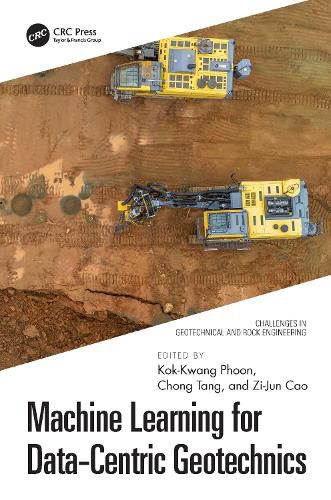
Machine learning and other digital technologies fed with large datasets offer a major set of tools for practical geotechnical design. Large language models and other generative AIs can perform cognitive tasks currently undertaken by humans -- and might even predict the next event based on some time series. This depends on a balance of data centricity, fit-for (and transformative) practice, and geotechnical context, and can be achieved by the integration of information, data, techniques, tools, perspectives, concepts, theories, along with experience from both geotechnical engineering and machine learning in computer science. And yet good engineering and research outcomes are still dependent on how practice (which includes the workforce) is improved or even transformed in the longer term to better serve end-users. This collection of focused chapters from a group of specialists presents principles and broader up to date practice of machine learning, along with a number of example areas of site characterization, design and construction in geotechnics.
This book is essential for sophisticated practitioners as well as graduate student.
$9.00 standard shipping within Australia
FREE standard shipping within Australia for orders over $100.00
Express & International shipping calculated at checkout
Stock availability can be subject to change without notice. We recommend calling the shop or contacting our online team to check availability of low stock items. Please see our Shopping Online page for more details.
Machine learning and other digital technologies fed with large datasets offer a major set of tools for practical geotechnical design. Large language models and other generative AIs can perform cognitive tasks currently undertaken by humans -- and might even predict the next event based on some time series. This depends on a balance of data centricity, fit-for (and transformative) practice, and geotechnical context, and can be achieved by the integration of information, data, techniques, tools, perspectives, concepts, theories, along with experience from both geotechnical engineering and machine learning in computer science. And yet good engineering and research outcomes are still dependent on how practice (which includes the workforce) is improved or even transformed in the longer term to better serve end-users. This collection of focused chapters from a group of specialists presents principles and broader up to date practice of machine learning, along with a number of example areas of site characterization, design and construction in geotechnics.
This book is essential for sophisticated practitioners as well as graduate student.
Search our extensive online catalogue.
