Readings Newsletter
Become a Readings Member to make your shopping experience even easier.
Sign in or sign up for free!
You’re not far away from qualifying for FREE standard shipping within Australia
You’ve qualified for FREE standard shipping within Australia
The cart is loading…


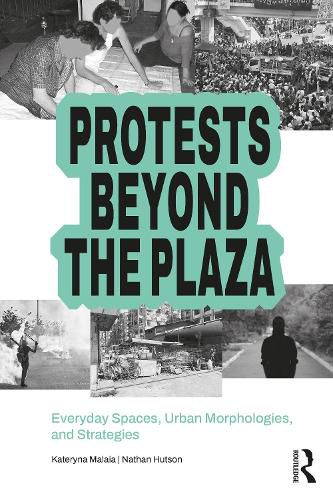
The chapters in this volume investigate some of the most important urban upheavals in recent history through different political, social and cultural contexts. Through this cross section of case studies from Ukraine, Belarus, Myanmar, Lebanon, Spain, United States, South Korea and Iran, authors envision the future of the successful urban protest as a whole-society movement in which all aspects of a city's morphology are effectively leveraged. The volume illustrates the ways in which these protests consciously and subconsciously drew lessons from each other's experiences and integrated physical and virtual tools. Urban environments shape, facilitate, and/or complicate protests and the degree to which protesters recognize and internalize these features is often key to their efficacy. Moreover, emerging protest strategies proliferate and change to fit the context in which they occur. Using interviews, mapping, architectural and planning-scale documentation of urban morphologies, this volume traces the development of important protests and the evolution of protest strategy in balancing the physical and the virtual. It will be of interest to architects, urban sociologists, urban planners, historians, political scientists, journalists, and anyone else interested in how the city shapes resistance.
$9.00 standard shipping within Australia
FREE standard shipping within Australia for orders over $100.00
Express & International shipping calculated at checkout
Stock availability can be subject to change without notice. We recommend calling the shop or contacting our online team to check availability of low stock items. Please see our Shopping Online page for more details.
The chapters in this volume investigate some of the most important urban upheavals in recent history through different political, social and cultural contexts. Through this cross section of case studies from Ukraine, Belarus, Myanmar, Lebanon, Spain, United States, South Korea and Iran, authors envision the future of the successful urban protest as a whole-society movement in which all aspects of a city's morphology are effectively leveraged. The volume illustrates the ways in which these protests consciously and subconsciously drew lessons from each other's experiences and integrated physical and virtual tools. Urban environments shape, facilitate, and/or complicate protests and the degree to which protesters recognize and internalize these features is often key to their efficacy. Moreover, emerging protest strategies proliferate and change to fit the context in which they occur. Using interviews, mapping, architectural and planning-scale documentation of urban morphologies, this volume traces the development of important protests and the evolution of protest strategy in balancing the physical and the virtual. It will be of interest to architects, urban sociologists, urban planners, historians, political scientists, journalists, and anyone else interested in how the city shapes resistance.
Search our extensive online catalogue.
