Readings Newsletter
Become a Readings Member to make your shopping experience even easier.
Sign in or sign up for free!
You’re not far away from qualifying for FREE standard shipping within Australia
You’ve qualified for FREE standard shipping within Australia
The cart is loading…


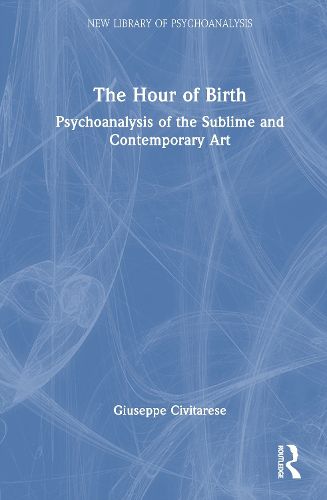
To explore the impact of psychoanalytic ideas and contemporary visual artists upon each other, this volume examines the aesthetics of the sublime as an allegory for psychic birth.
Through the lens of a radically intersubjective psychoanalytic theory, Civitarese reinvents the Freudian notion of sublimation. He theorises that the aesthetic of the sublime reflects the internal process of establishing a space of thought through the gradual differentiation of subject and object. Supported by numerous artworks by contemporary artists - from Serra to Kapoor, and Wei to Kiefer - the volume attends to questions such as: How does the psyche come into being? Why can beauty be considered necessary for life? How does what we experience as "simply" beautiful differ from the aesthetic experience of what is called "sublime"? In this way, Civitarese forges a conceptual tool that enables readers to weave together psychoanalytic theory and aesthetics.
Drawing on a deep understanding of both the latest psychoanalytic thinking and artistic practices, this book will appeal to all psychoanalysts and psychotherapists interested in art and questions of psychic development.
$9.00 standard shipping within Australia
FREE standard shipping within Australia for orders over $100.00
Express & International shipping calculated at checkout
Stock availability can be subject to change without notice. We recommend calling the shop or contacting our online team to check availability of low stock items. Please see our Shopping Online page for more details.
To explore the impact of psychoanalytic ideas and contemporary visual artists upon each other, this volume examines the aesthetics of the sublime as an allegory for psychic birth.
Through the lens of a radically intersubjective psychoanalytic theory, Civitarese reinvents the Freudian notion of sublimation. He theorises that the aesthetic of the sublime reflects the internal process of establishing a space of thought through the gradual differentiation of subject and object. Supported by numerous artworks by contemporary artists - from Serra to Kapoor, and Wei to Kiefer - the volume attends to questions such as: How does the psyche come into being? Why can beauty be considered necessary for life? How does what we experience as "simply" beautiful differ from the aesthetic experience of what is called "sublime"? In this way, Civitarese forges a conceptual tool that enables readers to weave together psychoanalytic theory and aesthetics.
Drawing on a deep understanding of both the latest psychoanalytic thinking and artistic practices, this book will appeal to all psychoanalysts and psychotherapists interested in art and questions of psychic development.
Search our extensive online catalogue.
