Readings Newsletter
Become a Readings Member to make your shopping experience even easier.
Sign in or sign up for free!
You’re not far away from qualifying for FREE standard shipping within Australia
You’ve qualified for FREE standard shipping within Australia
The cart is loading…


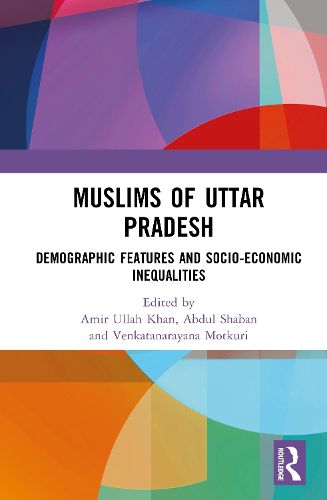
This book provides a comprehensive look into the development challenges and critical socio-economic issues of the Muslim communities in Uttar Pradesh-India's most populous state and home to one of its largest Muslim populations. Well-known for its syncretic culture, benevolent kings and nawabs, Uttar Pradesh has also been a region that has historically experienced significant religious politics and communal violence. This book moves beyond these sectoral approaches and attempts to present a holistic, detailed, and contemporary perspective on the development of Muslims in the state. It traces the complex sectarian, caste-based, occupational, and regional diversities within the Muslim population in Uttar Pradesh and investigates the intersections of identity, social stratification, and development. Drawing on detailed empirical research, the volume explores critical issues such as educational and occupational mobility, health disparities, livelihood patterns, migration, and access to financial services. It highlights the persistent inequalities faced by Muslims in the state and examines how historical and contemporary processes including sectarian divides, caste hierarchies, political marginalisation, and policy shortcomings have shaped their current realities. This book, along with its companion volume Development Challenges of Muslims in Uttar Pradesh, will be of interest to students and researchers of politics, development studies, anthropology, human geography, sociology, and minority studies. It will also be of relevance to those in development administration, civil society organizations, and the general reader interested in development and deprivation in the state or Hindu-Muslim politics.
$9.00 standard shipping within Australia
FREE standard shipping within Australia for orders over $100.00
Express & International shipping calculated at checkout
Stock availability can be subject to change without notice. We recommend calling the shop or contacting our online team to check availability of low stock items. Please see our Shopping Online page for more details.
This book provides a comprehensive look into the development challenges and critical socio-economic issues of the Muslim communities in Uttar Pradesh-India's most populous state and home to one of its largest Muslim populations. Well-known for its syncretic culture, benevolent kings and nawabs, Uttar Pradesh has also been a region that has historically experienced significant religious politics and communal violence. This book moves beyond these sectoral approaches and attempts to present a holistic, detailed, and contemporary perspective on the development of Muslims in the state. It traces the complex sectarian, caste-based, occupational, and regional diversities within the Muslim population in Uttar Pradesh and investigates the intersections of identity, social stratification, and development. Drawing on detailed empirical research, the volume explores critical issues such as educational and occupational mobility, health disparities, livelihood patterns, migration, and access to financial services. It highlights the persistent inequalities faced by Muslims in the state and examines how historical and contemporary processes including sectarian divides, caste hierarchies, political marginalisation, and policy shortcomings have shaped their current realities. This book, along with its companion volume Development Challenges of Muslims in Uttar Pradesh, will be of interest to students and researchers of politics, development studies, anthropology, human geography, sociology, and minority studies. It will also be of relevance to those in development administration, civil society organizations, and the general reader interested in development and deprivation in the state or Hindu-Muslim politics.
Search our extensive online catalogue.
