Readings Newsletter
Become a Readings Member to make your shopping experience even easier.
Sign in or sign up for free!
You’re not far away from qualifying for FREE standard shipping within Australia
You’ve qualified for FREE standard shipping within Australia
The cart is loading…


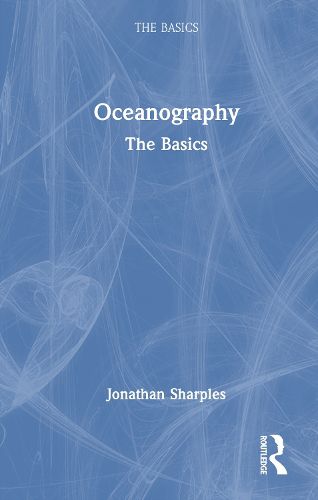
Earth's oceans are vital for sustaining life on our planet. Oceanography is an intrinsically multidisciplinary science that explores how the ocean does this. The author uses plankton as a focus for the book, drawing together the physics of the ocean circulation, the chemistry of nutrients and carbon, and the biology of the plankton.
The book begins by describing the major ocean currents and tides, and the importance of stratification, or layers, in the ocean. It explains how microscopic plants and animals, the plankton, are fundamental to ocean food chains and Earth's climate, and shows how ocean currents and mixing control the global distribution of plankton. Contrasts are explored between the open ocean and the shallow coastal seas, to help understand why the shallow seas are so productive. Case studies illustrate how the ocean supports fish, including upwelling of deep nutrients, the links between plankton and fish, and how ocean currents provide vital transport routes for fish eggs and larvae. The author explores the importance of the ocean in Earth's carbon cycle and climate. A final chapter describes some of the core techniques used to observe the ocean.
Oceanography: The Basics is an essential introduction to the field for undergraduates and includes further resources and short, quantitative diversions for students who want to take the concepts further.
$9.00 standard shipping within Australia
FREE standard shipping within Australia for orders over $100.00
Express & International shipping calculated at checkout
Stock availability can be subject to change without notice. We recommend calling the shop or contacting our online team to check availability of low stock items. Please see our Shopping Online page for more details.
Earth's oceans are vital for sustaining life on our planet. Oceanography is an intrinsically multidisciplinary science that explores how the ocean does this. The author uses plankton as a focus for the book, drawing together the physics of the ocean circulation, the chemistry of nutrients and carbon, and the biology of the plankton.
The book begins by describing the major ocean currents and tides, and the importance of stratification, or layers, in the ocean. It explains how microscopic plants and animals, the plankton, are fundamental to ocean food chains and Earth's climate, and shows how ocean currents and mixing control the global distribution of plankton. Contrasts are explored between the open ocean and the shallow coastal seas, to help understand why the shallow seas are so productive. Case studies illustrate how the ocean supports fish, including upwelling of deep nutrients, the links between plankton and fish, and how ocean currents provide vital transport routes for fish eggs and larvae. The author explores the importance of the ocean in Earth's carbon cycle and climate. A final chapter describes some of the core techniques used to observe the ocean.
Oceanography: The Basics is an essential introduction to the field for undergraduates and includes further resources and short, quantitative diversions for students who want to take the concepts further.
Search our extensive online catalogue.
