Readings Newsletter
Become a Readings Member to make your shopping experience even easier.
Sign in or sign up for free!
You’re not far away from qualifying for FREE standard shipping within Australia
You’ve qualified for FREE standard shipping within Australia
The cart is loading…


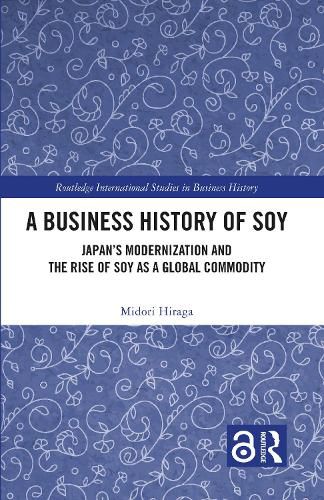
This is a business history of soy that reveals how Japanese imperial and military institutions and financial-mercantile-industrial interests created a role for soy as a versatile raw material and global commodity beginning in the 19th century, even before the Western world recognized this "oilseed." Originating in the rich food cultures of Asia, soy is praised as the "magic bean." About 360 million tons are produced in the world today, and it is traded globally to become food, feed, and fuel. It is the second largest source of vegetable oil in the world, and soy meal is an essential feed without which the modern livestock industries could not exist. Its dominance today is often accounted for in terms of its versatile nature. This book, however, argues that soy was transformed into a versatile industrial raw material and global commodity through the political-economic strategies of state and business actors engaged in the development of the capitalist world-economy. By studying little-known Japanese historical documents and corporate records, and focusing on the less-researched vegetable oil and industrial uses of soy, this book provides a better understanding of how this traditional Asian food was transformed into a global commodity embedded in contradictions. Promoted as a healthy and sustainable food source, soy is also a destructive cash crop whose cultivation and use have played a significant role in the current climate crisis. Based on this case of soy, the book provides a structural understanding of broader food and agriculture systems in the history of capitalism, making it of interest to students at an advanced level, academics, and researchers in the fields of business history, corporate governance, Japanese business, as well as the political economy of food and agriculture.
Chapters 2, 3, and the Conclusion of this book are freely available as a downloadable Open Access PDF at http://www.taylorfrancis.com under a Creative Commons Attribution-Non Commercial-No Derivatives (CC BY-NC-ND) 4.0 license.
$9.00 standard shipping within Australia
FREE standard shipping within Australia for orders over $100.00
Express & International shipping calculated at checkout
Stock availability can be subject to change without notice. We recommend calling the shop or contacting our online team to check availability of low stock items. Please see our Shopping Online page for more details.
This is a business history of soy that reveals how Japanese imperial and military institutions and financial-mercantile-industrial interests created a role for soy as a versatile raw material and global commodity beginning in the 19th century, even before the Western world recognized this "oilseed." Originating in the rich food cultures of Asia, soy is praised as the "magic bean." About 360 million tons are produced in the world today, and it is traded globally to become food, feed, and fuel. It is the second largest source of vegetable oil in the world, and soy meal is an essential feed without which the modern livestock industries could not exist. Its dominance today is often accounted for in terms of its versatile nature. This book, however, argues that soy was transformed into a versatile industrial raw material and global commodity through the political-economic strategies of state and business actors engaged in the development of the capitalist world-economy. By studying little-known Japanese historical documents and corporate records, and focusing on the less-researched vegetable oil and industrial uses of soy, this book provides a better understanding of how this traditional Asian food was transformed into a global commodity embedded in contradictions. Promoted as a healthy and sustainable food source, soy is also a destructive cash crop whose cultivation and use have played a significant role in the current climate crisis. Based on this case of soy, the book provides a structural understanding of broader food and agriculture systems in the history of capitalism, making it of interest to students at an advanced level, academics, and researchers in the fields of business history, corporate governance, Japanese business, as well as the political economy of food and agriculture.
Chapters 2, 3, and the Conclusion of this book are freely available as a downloadable Open Access PDF at http://www.taylorfrancis.com under a Creative Commons Attribution-Non Commercial-No Derivatives (CC BY-NC-ND) 4.0 license.
Search our extensive online catalogue.
