Readings Newsletter
Become a Readings Member to make your shopping experience even easier.
Sign in or sign up for free!
You’re not far away from qualifying for FREE standard shipping within Australia
You’ve qualified for FREE standard shipping within Australia
The cart is loading…


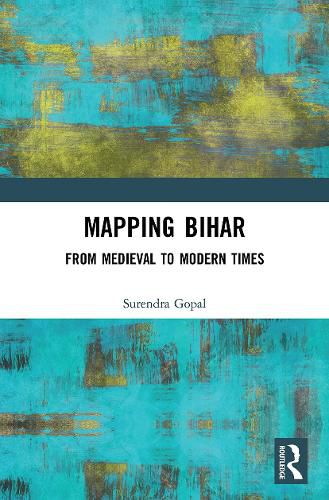
Written Indian history begins in sixth century bc with the history of Magadh (present day states of Jharkhand and Bihar). For almost a millennium Magadh dominated Indian history. The situation changed when Islamicized Turks entered India. The Mughals who followed the Turks ensured Bihar's economic prosperity; Patna became the most important centre of Himalayan trade. European Companies visited Patna to obtain a variety of goods, local as well as Himalayan. In the mid-eighteenth century Bihar and Bengal fell into the hands of Englishmen. A new chapter began. At the turn of the nineteenth century, Industrial Revolution began in Britain. The East India Company stopped trading in textiles. Instead, they promoted cotton cultivation in order that cotton was available to British textile factories. They promoted cultivation of indigo, needed by the textile manufacturing factories coming up. Land revenue source of the government's prime income, was collected even when agricultural output suffered massively. The government took deep interest in opium production but paid the cultivators less than the market price. British interference in agricultural matters caused wide spread agrarian distress. Indian society encountered many socio-religious reform movements. Raja Rammohun Roy and Swami Dayanand were major proponents of the new order. Stress was laid on gender equality, women empowerment and the modern system of education. Institutions for training doctors, engineers and scientists were opened. As time progressed, by and large, Biharis accepted the changes. Eventually social reform movements turned into the freedom movement in which Biharis played a leading role. This comprehensive volume is indispensable for scholars working on Bihar and modern and medieval South Asia.
Please note: Taylor & Francis does not sell or distribute the Hardback in India, Pakistan, Nepal, Bhutan, Bangladesh and Sri Lanka
$9.00 standard shipping within Australia
FREE standard shipping within Australia for orders over $100.00
Express & International shipping calculated at checkout
Stock availability can be subject to change without notice. We recommend calling the shop or contacting our online team to check availability of low stock items. Please see our Shopping Online page for more details.
Written Indian history begins in sixth century bc with the history of Magadh (present day states of Jharkhand and Bihar). For almost a millennium Magadh dominated Indian history. The situation changed when Islamicized Turks entered India. The Mughals who followed the Turks ensured Bihar's economic prosperity; Patna became the most important centre of Himalayan trade. European Companies visited Patna to obtain a variety of goods, local as well as Himalayan. In the mid-eighteenth century Bihar and Bengal fell into the hands of Englishmen. A new chapter began. At the turn of the nineteenth century, Industrial Revolution began in Britain. The East India Company stopped trading in textiles. Instead, they promoted cotton cultivation in order that cotton was available to British textile factories. They promoted cultivation of indigo, needed by the textile manufacturing factories coming up. Land revenue source of the government's prime income, was collected even when agricultural output suffered massively. The government took deep interest in opium production but paid the cultivators less than the market price. British interference in agricultural matters caused wide spread agrarian distress. Indian society encountered many socio-religious reform movements. Raja Rammohun Roy and Swami Dayanand were major proponents of the new order. Stress was laid on gender equality, women empowerment and the modern system of education. Institutions for training doctors, engineers and scientists were opened. As time progressed, by and large, Biharis accepted the changes. Eventually social reform movements turned into the freedom movement in which Biharis played a leading role. This comprehensive volume is indispensable for scholars working on Bihar and modern and medieval South Asia.
Please note: Taylor & Francis does not sell or distribute the Hardback in India, Pakistan, Nepal, Bhutan, Bangladesh and Sri Lanka
Search our extensive online catalogue.
