Readings Newsletter
Become a Readings Member to make your shopping experience even easier.
Sign in or sign up for free!
You’re not far away from qualifying for FREE standard shipping within Australia
You’ve qualified for FREE standard shipping within Australia
The cart is loading…


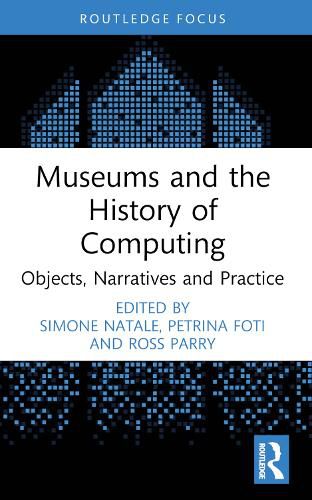
Museums and the History of Computing examines the critical role that cultural organizations, such as museums and galleries, play in shaping 'digital heritage': the cultural heritage surrounding computer technology.
Focusing on digital technologies as objects and practices that museums collect, exhibit, and preserve for the future, this book highlights how and why museums play a crucial role in preserving the rich heritage of the digital world, constructing powerful narratives that help make it relevant to the public. It demonstrates that the museum can be a powerful means of safeguarding and interpreting ephemeral and continually changing digital technology, offering new pathways for rethinking the very meaning of digital objects and practices in contemporary societies. It provides practices and strategies for the preservation and exhibition of computing artifacts and ways to accommodate and respond to narratives about histories of computing that circulate in the public arena. Bringing together leading museum and university researchers and practitioners, and mobilizing cross-cutting debates and approaches in areas such as museum studies, cultural heritage, history of technology, anthropology, and media studies, this book challenges us to think critically about what 'digital' is when examined not only as a tool but as a cultural object deserving of attention and a place within the museum.
Museums and the History of Computing is for museum studies students and researchers as well as museum practitioners - especially those with an interest in digital technology and heritage. It will be of interest to researchers and students interested in histories of computing and digital media and in digital media studies.
$9.00 standard shipping within Australia
FREE standard shipping within Australia for orders over $100.00
Express & International shipping calculated at checkout
Stock availability can be subject to change without notice. We recommend calling the shop or contacting our online team to check availability of low stock items. Please see our Shopping Online page for more details.
Museums and the History of Computing examines the critical role that cultural organizations, such as museums and galleries, play in shaping 'digital heritage': the cultural heritage surrounding computer technology.
Focusing on digital technologies as objects and practices that museums collect, exhibit, and preserve for the future, this book highlights how and why museums play a crucial role in preserving the rich heritage of the digital world, constructing powerful narratives that help make it relevant to the public. It demonstrates that the museum can be a powerful means of safeguarding and interpreting ephemeral and continually changing digital technology, offering new pathways for rethinking the very meaning of digital objects and practices in contemporary societies. It provides practices and strategies for the preservation and exhibition of computing artifacts and ways to accommodate and respond to narratives about histories of computing that circulate in the public arena. Bringing together leading museum and university researchers and practitioners, and mobilizing cross-cutting debates and approaches in areas such as museum studies, cultural heritage, history of technology, anthropology, and media studies, this book challenges us to think critically about what 'digital' is when examined not only as a tool but as a cultural object deserving of attention and a place within the museum.
Museums and the History of Computing is for museum studies students and researchers as well as museum practitioners - especially those with an interest in digital technology and heritage. It will be of interest to researchers and students interested in histories of computing and digital media and in digital media studies.
Search our extensive online catalogue.
