Readings Newsletter
Become a Readings Member to make your shopping experience even easier.
Sign in or sign up for free!
You’re not far away from qualifying for FREE standard shipping within Australia
You’ve qualified for FREE standard shipping within Australia
The cart is loading…


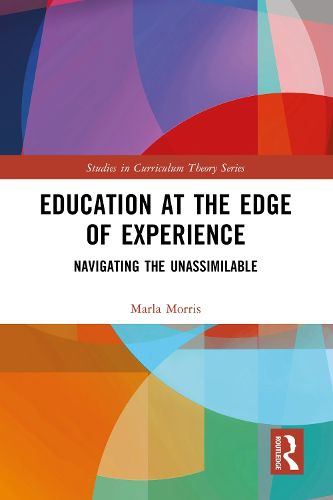
Presenting a unique exploration of education at "the edge of experience," this book investigates how unassimilable concepts can reconceptualize education in order to grapple with what is beyond understanding. Working at the intersection of curriculum theory, philosophy and psychoanalysis, Morris examines how each of these "unassimilable" concepts such as lament, disavowal, breathlessness, and the Kafkaesque point toward currere as the edge of experience. It addresses what Lee Braver calls "the groundless grounds" and what Avital Ronell calls "the quicksand that is philosophy" to approach slippage and breaking points through an interdisciplinary lens. Pointing to an understanding of our largely social ills and extending William F. Pinar's early work on currere in new and innovative directions, this book will appeal to curriculum theorists, education philosophers, psychoanalysts, and those with interests in the philosophy and theory of education.
$9.00 standard shipping within Australia
FREE standard shipping within Australia for orders over $100.00
Express & International shipping calculated at checkout
Stock availability can be subject to change without notice. We recommend calling the shop or contacting our online team to check availability of low stock items. Please see our Shopping Online page for more details.
Presenting a unique exploration of education at "the edge of experience," this book investigates how unassimilable concepts can reconceptualize education in order to grapple with what is beyond understanding. Working at the intersection of curriculum theory, philosophy and psychoanalysis, Morris examines how each of these "unassimilable" concepts such as lament, disavowal, breathlessness, and the Kafkaesque point toward currere as the edge of experience. It addresses what Lee Braver calls "the groundless grounds" and what Avital Ronell calls "the quicksand that is philosophy" to approach slippage and breaking points through an interdisciplinary lens. Pointing to an understanding of our largely social ills and extending William F. Pinar's early work on currere in new and innovative directions, this book will appeal to curriculum theorists, education philosophers, psychoanalysts, and those with interests in the philosophy and theory of education.
Search our extensive online catalogue.
