Readings Newsletter
Become a Readings Member to make your shopping experience even easier.
Sign in or sign up for free!
You’re not far away from qualifying for FREE standard shipping within Australia
You’ve qualified for FREE standard shipping within Australia
The cart is loading…


This book covers unsupervised learning, supervised learning, clustering approaches, feature engineering, explainable AI and multioutput regression models for subsurface engineering problems. Processing voluminous and complex data sets are the primary focus of the field of machine learning (ML). ML aims to develop data-driven methods and computational algorithms that can learn to identify complex and non-linear patterns to understand and predict the relationships between variables by analysing extensive data. Although ML models provide the final output for predictions, several steps need to be performed to achieve accurate predictions. These steps, data pre-processing, feature selection, feature engineering and outlier removal, are all contained in this book. New models are also developed using existing ML architecture and learning theories to improve the performance of traditional ML models and handle small and big data without manual adjustments.
This research-oriented book will help subsurface engineers, geophysicists, and geoscientists become familiar with data science and ML advances relevant to subsurface engineering. Additionally, it demonstrates the use of data-driven approaches for salt identification, seismic interpretation, estimating enhanced oil recovery factor, predicting pore fluid types, petrophysical property prediction, estimating pressure drop in pipelines, bubble point pressure prediction, enhancing drilling mud loss, smart well completion and synthetic well log predictions.
$9.00 standard shipping within Australia
FREE standard shipping within Australia for orders over $100.00
Express & International shipping calculated at checkout
Stock availability can be subject to change without notice. We recommend calling the shop or contacting our online team to check availability of low stock items. Please see our Shopping Online page for more details.
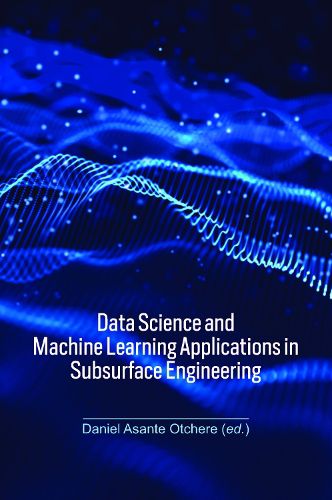
This book covers unsupervised learning, supervised learning, clustering approaches, feature engineering, explainable AI and multioutput regression models for subsurface engineering problems. Processing voluminous and complex data sets are the primary focus of the field of machine learning (ML). ML aims to develop data-driven methods and computational algorithms that can learn to identify complex and non-linear patterns to understand and predict the relationships between variables by analysing extensive data. Although ML models provide the final output for predictions, several steps need to be performed to achieve accurate predictions. These steps, data pre-processing, feature selection, feature engineering and outlier removal, are all contained in this book. New models are also developed using existing ML architecture and learning theories to improve the performance of traditional ML models and handle small and big data without manual adjustments.
This research-oriented book will help subsurface engineers, geophysicists, and geoscientists become familiar with data science and ML advances relevant to subsurface engineering. Additionally, it demonstrates the use of data-driven approaches for salt identification, seismic interpretation, estimating enhanced oil recovery factor, predicting pore fluid types, petrophysical property prediction, estimating pressure drop in pipelines, bubble point pressure prediction, enhancing drilling mud loss, smart well completion and synthetic well log predictions.
Search our extensive online catalogue.
