Readings Newsletter
Become a Readings Member to make your shopping experience even easier.
Sign in or sign up for free!
You’re not far away from qualifying for FREE standard shipping within Australia
You’ve qualified for FREE standard shipping within Australia
The cart is loading…


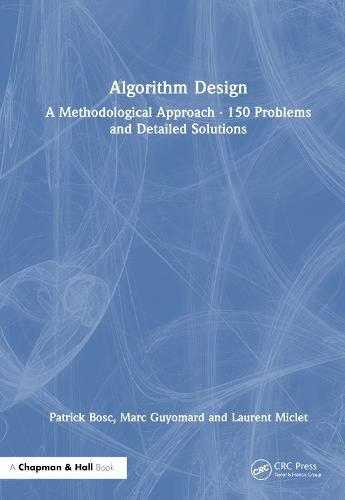
A best-seller in its French edition, the construction of this book is original and its success in the French market demonstrates its appeal. It is based on three principles: 1. An organization of the chapters by families of algorithms : exhaustive search, divide and conquer, etc. At the contrary, there is no chapter only devoted to a systematic exposure of, say, algorithms on strings. Some of these will be found in different chapters. 2. For each family of algorithms, an introduction is given to the mathematical principles and the issues of a rigorous design, with one or two pedagogical examples. 3. For its most part, the book details 150 problems, spanning on seven families of algorithms. For each problem, a precise and progressive statement is given. More important, a complete solution is detailed, with respect to the design principles that have been presented ; often, some classical errors are pointed at. Roughly speaking, two thirds of the book are devoted to the detailed rational construction of the solutions.
$9.00 standard shipping within Australia
FREE standard shipping within Australia for orders over $100.00
Express & International shipping calculated at checkout
Stock availability can be subject to change without notice. We recommend calling the shop or contacting our online team to check availability of low stock items. Please see our Shopping Online page for more details.
A best-seller in its French edition, the construction of this book is original and its success in the French market demonstrates its appeal. It is based on three principles: 1. An organization of the chapters by families of algorithms : exhaustive search, divide and conquer, etc. At the contrary, there is no chapter only devoted to a systematic exposure of, say, algorithms on strings. Some of these will be found in different chapters. 2. For each family of algorithms, an introduction is given to the mathematical principles and the issues of a rigorous design, with one or two pedagogical examples. 3. For its most part, the book details 150 problems, spanning on seven families of algorithms. For each problem, a precise and progressive statement is given. More important, a complete solution is detailed, with respect to the design principles that have been presented ; often, some classical errors are pointed at. Roughly speaking, two thirds of the book are devoted to the detailed rational construction of the solutions.
Search our extensive online catalogue.
