Readings Newsletter
Become a Readings Member to make your shopping experience even easier.
Sign in or sign up for free!
You’re not far away from qualifying for FREE standard shipping within Australia
You’ve qualified for FREE standard shipping within Australia
The cart is loading…


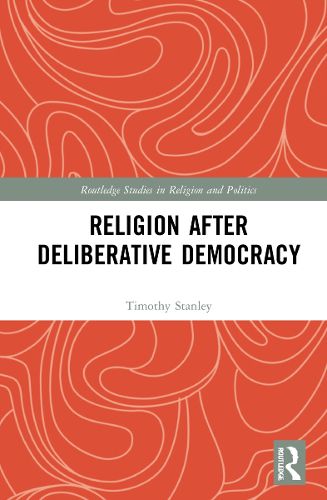
Religion after Deliberative Democracy responds to gaps exposed by the case of religion in deliberative democratic theory.
Religion's persistent visibility in political life has called for new solutions for healing deeply divided societies. In response, the author begins with Jeffrey Stout's pragmatist vision of democracy before providing a series of supplements in subsequent chapters. Past legacies are refigured in a rapprochement with Juergen Habermas's work which is differentiated from the distinctive relevance of Hannah Arendt's Vita Activa. New developments in comparative political theology are complemented by recent systems theory approaches to institutional interactions. Peaceful protest movements are reframed in light of the trust-building capacities of minipublics. The result is reason for renewed confidence in democratic practices attuned to fostering political plurality and capable of responding to persistent religious partisanship.
This book fills a crucial space in the literature on religion and democracy and will be of interest to students and scholars of philosophy of religion, theology, pragmatism, and political theory.
$9.00 standard shipping within Australia
FREE standard shipping within Australia for orders over $100.00
Express & International shipping calculated at checkout
Stock availability can be subject to change without notice. We recommend calling the shop or contacting our online team to check availability of low stock items. Please see our Shopping Online page for more details.
Religion after Deliberative Democracy responds to gaps exposed by the case of religion in deliberative democratic theory.
Religion's persistent visibility in political life has called for new solutions for healing deeply divided societies. In response, the author begins with Jeffrey Stout's pragmatist vision of democracy before providing a series of supplements in subsequent chapters. Past legacies are refigured in a rapprochement with Juergen Habermas's work which is differentiated from the distinctive relevance of Hannah Arendt's Vita Activa. New developments in comparative political theology are complemented by recent systems theory approaches to institutional interactions. Peaceful protest movements are reframed in light of the trust-building capacities of minipublics. The result is reason for renewed confidence in democratic practices attuned to fostering political plurality and capable of responding to persistent religious partisanship.
This book fills a crucial space in the literature on religion and democracy and will be of interest to students and scholars of philosophy of religion, theology, pragmatism, and political theory.
Search our extensive online catalogue.
