Readings Newsletter
Become a Readings Member to make your shopping experience even easier.
Sign in or sign up for free!
You’re not far away from qualifying for FREE standard shipping within Australia
You’ve qualified for FREE standard shipping within Australia
The cart is loading…


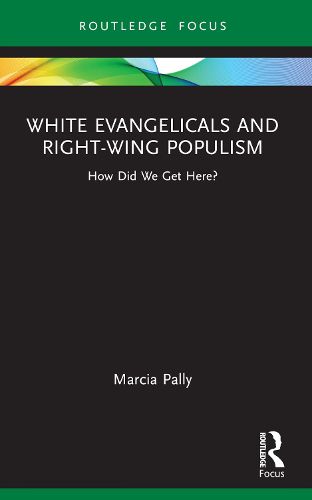
How did America’s white evangelicals, from often progressive history, come to right-wing populism? Addressing populism requires understanding how its historico-cultural roots ground present politics. How have the very qualities that contributed much to American vibrancy-an anti-authoritarian government-wariness and energetic community-building-turned, under conditions of distress, to defensive, us-them worldviews?
Readers will gain an understanding of populism and of the socio-political and religious history from which populism draws its us-them policies and worldview. The book ponders the tragic cast of the white evangelical story: (i) the distorting effects of economic and way-of-life duress on the understanding of history and present circumstances and (ii) the tragedy of choosing us-them solutions to duress that won’t relieve it, leaving the duress in place. Readers will trace the trajectory from economic, status loss, and way-of-life duresses to solutions in populist, us-them binaries. They will explore the robust white evangelical contribution to civil society but also to racism, xenophobia, and sexism. White evangelicals not in the ranks of the right-their worldview and activism-are discussed in a final chapter.
This book is valuable reading for students of political and social sciences as well as anyone interested in US politics.
$9.00 standard shipping within Australia
FREE standard shipping within Australia for orders over $100.00
Express & International shipping calculated at checkout
Stock availability can be subject to change without notice. We recommend calling the shop or contacting our online team to check availability of low stock items. Please see our Shopping Online page for more details.
How did America’s white evangelicals, from often progressive history, come to right-wing populism? Addressing populism requires understanding how its historico-cultural roots ground present politics. How have the very qualities that contributed much to American vibrancy-an anti-authoritarian government-wariness and energetic community-building-turned, under conditions of distress, to defensive, us-them worldviews?
Readers will gain an understanding of populism and of the socio-political and religious history from which populism draws its us-them policies and worldview. The book ponders the tragic cast of the white evangelical story: (i) the distorting effects of economic and way-of-life duress on the understanding of history and present circumstances and (ii) the tragedy of choosing us-them solutions to duress that won’t relieve it, leaving the duress in place. Readers will trace the trajectory from economic, status loss, and way-of-life duresses to solutions in populist, us-them binaries. They will explore the robust white evangelical contribution to civil society but also to racism, xenophobia, and sexism. White evangelicals not in the ranks of the right-their worldview and activism-are discussed in a final chapter.
This book is valuable reading for students of political and social sciences as well as anyone interested in US politics.
Search our extensive online catalogue.
