Readings Newsletter
Become a Readings Member to make your shopping experience even easier.
Sign in or sign up for free!
You’re not far away from qualifying for FREE standard shipping within Australia
You’ve qualified for FREE standard shipping within Australia
The cart is loading…


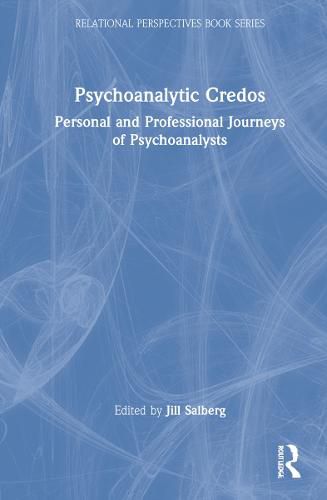
Developing psychoanalytic credos, a set of beliefs that inform how you listen and approach the analytic enterprise with patients, is in many ways the scaffolding of psychoanalytic training. Drawing upon Mannie Ghent’s original Credo essay, 27 psychoanalysts were asked to write their credos and/or their psychoanalytic journey. This book represents a multi-theoretical and multi-generational grouping, trained at different institutes, during different eras (grouped by decades 1960-2000) and across cultures. They are drawn from analysts identified with Relational, Object Relations, Contemporary Freudians and Kleinian/Bionian perspectives as well as those who don’t easily fit categorization. This book serves to provide companionship to analysts in training, as part of reading lists in institutes as well as analysts post-training and yet still evolving in their psychoanalytic journey.
$9.00 standard shipping within Australia
FREE standard shipping within Australia for orders over $100.00
Express & International shipping calculated at checkout
Stock availability can be subject to change without notice. We recommend calling the shop or contacting our online team to check availability of low stock items. Please see our Shopping Online page for more details.
Developing psychoanalytic credos, a set of beliefs that inform how you listen and approach the analytic enterprise with patients, is in many ways the scaffolding of psychoanalytic training. Drawing upon Mannie Ghent’s original Credo essay, 27 psychoanalysts were asked to write their credos and/or their psychoanalytic journey. This book represents a multi-theoretical and multi-generational grouping, trained at different institutes, during different eras (grouped by decades 1960-2000) and across cultures. They are drawn from analysts identified with Relational, Object Relations, Contemporary Freudians and Kleinian/Bionian perspectives as well as those who don’t easily fit categorization. This book serves to provide companionship to analysts in training, as part of reading lists in institutes as well as analysts post-training and yet still evolving in their psychoanalytic journey.
Search our extensive online catalogue.
