Readings Newsletter
Become a Readings Member to make your shopping experience even easier.
Sign in or sign up for free!
You’re not far away from qualifying for FREE standard shipping within Australia
You’ve qualified for FREE standard shipping within Australia
The cart is loading…


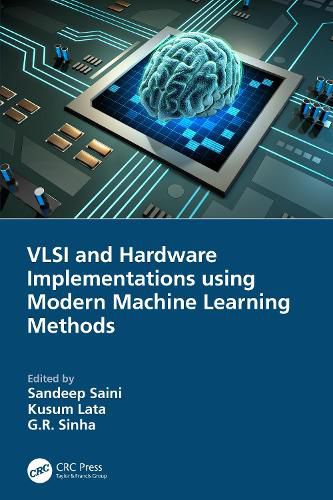
Machine learning is a potential solution to resolve bottleneck issues in VLSI via optimizing tasks in the design process. This book aims to provide the latest machine-learning-based methods, algorithms, architectures, and frameworks designed for VLSI design. The focus is on digital, analog, and mixed-signal design techniques, device modeling, physical design, hardware implementation, testability, reconfigurable design, synthesis and verification, and related areas. Chapters include case studies as well as novel research ideas in the given field. Overall, the book provides practical implementations of VLSI design, IC design, and hardware realization using machine learning techniques.
Features:
Provides the details of state-of-the-art machine learning methods used in VLSI design Discusses hardware implementation and device modeling pertaining to machine learning algorithms Explores machine learning for various VLSI architectures and reconfigurable computing Illustrates the latest techniques for device size and feature optimization Highlights the latest case studies and reviews of the methods used for hardware implementation
This book is aimed at researchers, professionals, and graduate students in VLSI, machine learning, electrical and electronic engineering, computer engineering, and hardware systems.
$9.00 standard shipping within Australia
FREE standard shipping within Australia for orders over $100.00
Express & International shipping calculated at checkout
Stock availability can be subject to change without notice. We recommend calling the shop or contacting our online team to check availability of low stock items. Please see our Shopping Online page for more details.
Machine learning is a potential solution to resolve bottleneck issues in VLSI via optimizing tasks in the design process. This book aims to provide the latest machine-learning-based methods, algorithms, architectures, and frameworks designed for VLSI design. The focus is on digital, analog, and mixed-signal design techniques, device modeling, physical design, hardware implementation, testability, reconfigurable design, synthesis and verification, and related areas. Chapters include case studies as well as novel research ideas in the given field. Overall, the book provides practical implementations of VLSI design, IC design, and hardware realization using machine learning techniques.
Features:
Provides the details of state-of-the-art machine learning methods used in VLSI design Discusses hardware implementation and device modeling pertaining to machine learning algorithms Explores machine learning for various VLSI architectures and reconfigurable computing Illustrates the latest techniques for device size and feature optimization Highlights the latest case studies and reviews of the methods used for hardware implementation
This book is aimed at researchers, professionals, and graduate students in VLSI, machine learning, electrical and electronic engineering, computer engineering, and hardware systems.
Search our extensive online catalogue.
