Readings Newsletter
Become a Readings Member to make your shopping experience even easier.
Sign in or sign up for free!
You’re not far away from qualifying for FREE standard shipping within Australia
You’ve qualified for FREE standard shipping within Australia
The cart is loading…


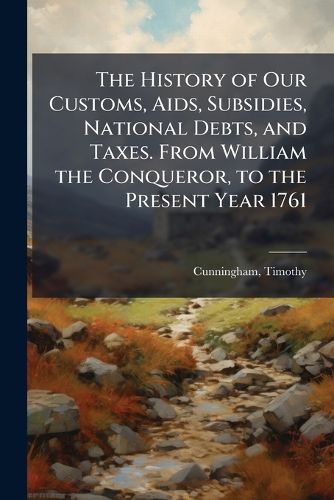
Explore the intricate financial landscape of England from William the Conqueror to 1761 with "The History of Our Customs, Aids, Subsidies, National Debts, and Taxes." This comprehensive work by Timothy Cunningham delves into the evolution of British financial systems, offering insights into the customs, aids, subsidies, national debts, and taxes that shaped the nation's economic structure. From medieval practices to the burgeoning complexities of the 18th century, Cunningham meticulously charts the changes and continuities in British fiscal policy.
A vital resource for historians, economists, and anyone interested in understanding the foundations of modern finance, this book provides a detailed account of the economic policies that influenced the course of British history. Discover how historical financial decisions continue to resonate in contemporary economic practices.
This work has been selected by scholars as being culturally important, and is part of the knowledge base of civilization as we know it. This work was reproduced from the original artifact, and remains as true to the original work as possible. Therefore, you will see the original copyright references, library stamps (as most of these works have been housed in our most important libraries around the world), and other notations in the work.
This work is in the public domain in the United States of America, and possibly other nations. Within the United States, you may freely copy and distribute this work, as no entity (individual or corporate) has a copyright on the body of the work.
As a reproduction of a historical artifact, this work may contain missing or blurred pages, poor pictures, errant marks, etc. Scholars believe, and we concur, that this work is important enough to be preserved, reproduced, and made generally available to the public. We appreciate your support of the preservation process, and thank you for being an important part of keeping this knowledge alive and relevant.
$9.00 standard shipping within Australia
FREE standard shipping within Australia for orders over $100.00
Express & International shipping calculated at checkout
Explore the intricate financial landscape of England from William the Conqueror to 1761 with "The History of Our Customs, Aids, Subsidies, National Debts, and Taxes." This comprehensive work by Timothy Cunningham delves into the evolution of British financial systems, offering insights into the customs, aids, subsidies, national debts, and taxes that shaped the nation's economic structure. From medieval practices to the burgeoning complexities of the 18th century, Cunningham meticulously charts the changes and continuities in British fiscal policy.
A vital resource for historians, economists, and anyone interested in understanding the foundations of modern finance, this book provides a detailed account of the economic policies that influenced the course of British history. Discover how historical financial decisions continue to resonate in contemporary economic practices.
This work has been selected by scholars as being culturally important, and is part of the knowledge base of civilization as we know it. This work was reproduced from the original artifact, and remains as true to the original work as possible. Therefore, you will see the original copyright references, library stamps (as most of these works have been housed in our most important libraries around the world), and other notations in the work.
This work is in the public domain in the United States of America, and possibly other nations. Within the United States, you may freely copy and distribute this work, as no entity (individual or corporate) has a copyright on the body of the work.
As a reproduction of a historical artifact, this work may contain missing or blurred pages, poor pictures, errant marks, etc. Scholars believe, and we concur, that this work is important enough to be preserved, reproduced, and made generally available to the public. We appreciate your support of the preservation process, and thank you for being an important part of keeping this knowledge alive and relevant.
Search our extensive online catalogue.
