Readings Newsletter
Become a Readings Member to make your shopping experience even easier.
Sign in or sign up for free!
You’re not far away from qualifying for FREE standard shipping within Australia
You’ve qualified for FREE standard shipping within Australia
The cart is loading…


This title is printed to order. This book may have been self-published. If so, we cannot guarantee the quality of the content. In the main most books will have gone through the editing process however some may not. We therefore suggest that you be aware of this before ordering this book. If in doubt check either the author or publisher’s details as we are unable to accept any returns unless they are faulty. Please contact us if you have any questions.
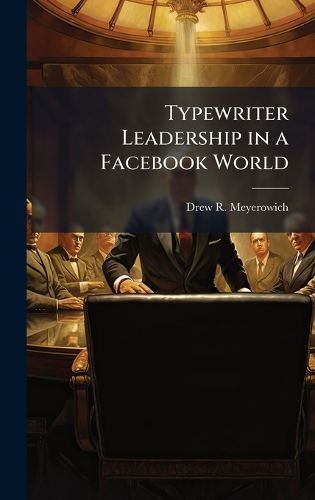
Throughout history, technology has played a vital role in combat. While improvements in weaponry are typically at the front of the military leader's minds, technology like the internet would not appear to be as significant. However, the internet has drastically increased the speed at which news and information travels around the world. While this fact alone does not change how military leaders must think both tactically and strategically, it does require leaders to be adaptive and responsive to the strategic impact of tactical news and information. Historically, information was a form of power closely guarded, secured, and provided only when there was a need to know. Modern communication equipment and the internet make global news available to anyone who wants it, or wants to provide it. Senior military leaders grew up in the Military during a period where this technology was not a reality. In that short period of time, typewritten forms were replaced by emails and instant messaging. Failing to adapt to the speed at which information travels has plagued today's military leadership in dealing with the management and understanding of information, traditional media, and new forms of media like the internet. Legacy policies towards information management have crippled the United States efforts against terrorism creating a military that is reactive and defensive towards what Thomas L. Friedman refers to as 'A Flat World.'; This monograph focuses on both these failures, and indicates a way ahead in understanding Strategic Communications (STRATCOMs) within the military and creating a culture that is both proactive and adaptive to the realities of STRATCOMs in the 21st Century. Military leadership failed to understand the strategic impact of key events in Afghanistan and Iraq. Compounding this lack of understanding was the ability to visualize the second and third order effects of military plans and operations in the strategic landscape. The failure to visualize these e
This work has been selected by scholars as being culturally important, and is part of the knowledge base of civilization as we know it. This work was reproduced from the original artifact, and remains as true to the original work as possible. Therefore, you will see the original copyright references, library stamps (as most of these works have been housed in our most important libraries around the world), and other notations in the work.
This work is in the public domain in the United States of America, and possibly other nations. Within the United States, you may freely copy and distribute this work, as no entity (individual or corporate) has a copyright on the body of the work.
As a reproduction of a historical artifact, this work may contain missing or blurred pages, poor pictures, errant marks, etc. Scholars believe, and we concur, that this work is important enough to be preserved, reproduced, and made generally available to the public. We appreciate your support of the preservation process, and thank you for being an important part of keeping this knowledge alive and relevant.
$9.00 standard shipping within Australia
FREE standard shipping within Australia for orders over $100.00
Express & International shipping calculated at checkout
Stock availability can be subject to change without notice. We recommend calling the shop or contacting our online team to check availability of low stock items. Please see our Shopping Online page for more details.
This title is printed to order. This book may have been self-published. If so, we cannot guarantee the quality of the content. In the main most books will have gone through the editing process however some may not. We therefore suggest that you be aware of this before ordering this book. If in doubt check either the author or publisher’s details as we are unable to accept any returns unless they are faulty. Please contact us if you have any questions.
Throughout history, technology has played a vital role in combat. While improvements in weaponry are typically at the front of the military leader's minds, technology like the internet would not appear to be as significant. However, the internet has drastically increased the speed at which news and information travels around the world. While this fact alone does not change how military leaders must think both tactically and strategically, it does require leaders to be adaptive and responsive to the strategic impact of tactical news and information. Historically, information was a form of power closely guarded, secured, and provided only when there was a need to know. Modern communication equipment and the internet make global news available to anyone who wants it, or wants to provide it. Senior military leaders grew up in the Military during a period where this technology was not a reality. In that short period of time, typewritten forms were replaced by emails and instant messaging. Failing to adapt to the speed at which information travels has plagued today's military leadership in dealing with the management and understanding of information, traditional media, and new forms of media like the internet. Legacy policies towards information management have crippled the United States efforts against terrorism creating a military that is reactive and defensive towards what Thomas L. Friedman refers to as 'A Flat World.'; This monograph focuses on both these failures, and indicates a way ahead in understanding Strategic Communications (STRATCOMs) within the military and creating a culture that is both proactive and adaptive to the realities of STRATCOMs in the 21st Century. Military leadership failed to understand the strategic impact of key events in Afghanistan and Iraq. Compounding this lack of understanding was the ability to visualize the second and third order effects of military plans and operations in the strategic landscape. The failure to visualize these e
This work has been selected by scholars as being culturally important, and is part of the knowledge base of civilization as we know it. This work was reproduced from the original artifact, and remains as true to the original work as possible. Therefore, you will see the original copyright references, library stamps (as most of these works have been housed in our most important libraries around the world), and other notations in the work.
This work is in the public domain in the United States of America, and possibly other nations. Within the United States, you may freely copy and distribute this work, as no entity (individual or corporate) has a copyright on the body of the work.
As a reproduction of a historical artifact, this work may contain missing or blurred pages, poor pictures, errant marks, etc. Scholars believe, and we concur, that this work is important enough to be preserved, reproduced, and made generally available to the public. We appreciate your support of the preservation process, and thank you for being an important part of keeping this knowledge alive and relevant.
Search our extensive online catalogue.
