Readings Newsletter
Become a Readings Member to make your shopping experience even easier.
Sign in or sign up for free!
You’re not far away from qualifying for FREE standard shipping within Australia
You’ve qualified for FREE standard shipping within Australia
The cart is loading…


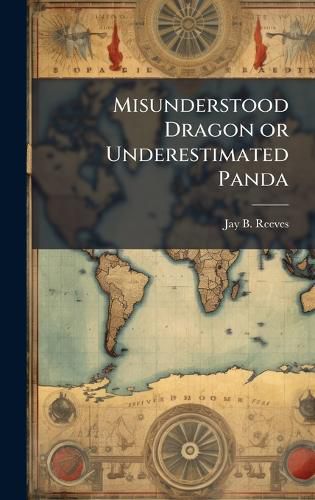
This study uses the theory of strategic culture to analyze how China reacts to an external national security crisis. Following an overview of the theory, the author introduces a strategic culture framework. Three cases studies (Korean War, Vietnam War, and 1995 Taiwan crisis) serve as qualitative evidence for the framework. This study concludes that strategic culture is useful as a supplementary lens in understanding Chinese responses to a security crisis. The framework also provides a rough translation of Chinese strategic concepts into familiar US concepts. The framework can aid a US strategist by helping anticipate how Chinese strategic culture will lead Beijing to react during a security crisis. A sample application of the framework in a real-world scenario is included as an appendix.
This work has been selected by scholars as being culturally important, and is part of the knowledge base of civilization as we know it. This work was reproduced from the original artifact, and remains as true to the original work as possible. Therefore, you will see the original copyright references, library stamps (as most of these works have been housed in our most important libraries around the world), and other notations in the work.
This work is in the public domain in the United States of America, and possibly other nations. Within the United States, you may freely copy and distribute this work, as no entity (individual or corporate) has a copyright on the body of the work.
As a reproduction of a historical artifact, this work may contain missing or blurred pages, poor pictures, errant marks, etc. Scholars believe, and we concur, that this work is important enough to be preserved, reproduced, and made generally available to the public. We appreciate your support of the preservation process, and thank you for being an important part of keeping this knowledge alive and relevant.
$9.00 standard shipping within Australia
FREE standard shipping within Australia for orders over $100.00
Express & International shipping calculated at checkout
Stock availability can be subject to change without notice. We recommend calling the shop or contacting our online team to check availability of low stock items. Please see our Shopping Online page for more details.
This study uses the theory of strategic culture to analyze how China reacts to an external national security crisis. Following an overview of the theory, the author introduces a strategic culture framework. Three cases studies (Korean War, Vietnam War, and 1995 Taiwan crisis) serve as qualitative evidence for the framework. This study concludes that strategic culture is useful as a supplementary lens in understanding Chinese responses to a security crisis. The framework also provides a rough translation of Chinese strategic concepts into familiar US concepts. The framework can aid a US strategist by helping anticipate how Chinese strategic culture will lead Beijing to react during a security crisis. A sample application of the framework in a real-world scenario is included as an appendix.
This work has been selected by scholars as being culturally important, and is part of the knowledge base of civilization as we know it. This work was reproduced from the original artifact, and remains as true to the original work as possible. Therefore, you will see the original copyright references, library stamps (as most of these works have been housed in our most important libraries around the world), and other notations in the work.
This work is in the public domain in the United States of America, and possibly other nations. Within the United States, you may freely copy and distribute this work, as no entity (individual or corporate) has a copyright on the body of the work.
As a reproduction of a historical artifact, this work may contain missing or blurred pages, poor pictures, errant marks, etc. Scholars believe, and we concur, that this work is important enough to be preserved, reproduced, and made generally available to the public. We appreciate your support of the preservation process, and thank you for being an important part of keeping this knowledge alive and relevant.
Search our extensive online catalogue.
