Readings Newsletter
Become a Readings Member to make your shopping experience even easier.
Sign in or sign up for free!
You’re not far away from qualifying for FREE standard shipping within Australia
You’ve qualified for FREE standard shipping within Australia
The cart is loading…


This title is printed to order. This book may have been self-published. If so, we cannot guarantee the quality of the content. In the main most books will have gone through the editing process however some may not. We therefore suggest that you be aware of this before ordering this book. If in doubt check either the author or publisher’s details as we are unable to accept any returns unless they are faulty. Please contact us if you have any questions.
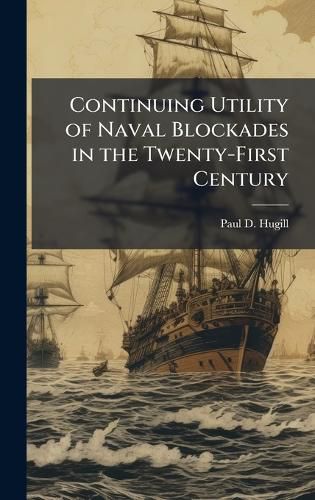
Throughout history seagoing nations have nurtured their navies to protect their ocean lifelines and influence regional and world events. Blockades are one way in which a naval power has historically influenced these events. In time of war and peace, this tool of naval coercion is still an option exercised by nations to influence foreign policy crises. This study investigated the continuing utility of the naval blockade in the attainment of US foreign policy goals in the twenty-first century. It used a historical study of seven blockades to establish a common set of factors that influenced the effectiveness of sanctions enforced by a naval blockade. These blockades took place between 1861 and 1997 under varying conditions and scopes. The study identified five primary factors and eleven secondary factors that are common in the effectiveness of all the blockades. Analysis of these common factors through application in two hypothetical world crises where a blockade could be employed revealed that the naval blockade is still a viable option to aid in attaining foreign policy objectives. The naval blockade should be used sparingly and when used provided the full support of the diplomatic and economic tools of foreign policy, lest they lose their credibility.
This work has been selected by scholars as being culturally important, and is part of the knowledge base of civilization as we know it. This work was reproduced from the original artifact, and remains as true to the original work as possible. Therefore, you will see the original copyright references, library stamps (as most of these works have been housed in our most important libraries around the world), and other notations in the work.
This work is in the public domain in the United States of America, and possibly other nations. Within the United States, you may freely copy and distribute this work, as no entity (individual or corporate) has a copyright on the body of the work.
As a reproduction of a historical artifact, this work may contain missing or blurred pages, poor pictures, errant marks, etc. Scholars believe, and we concur, that this work is important enough to be preserved, reproduced, and made generally available to the public. We appreciate your support of the preservation process, and thank you for being an important part of keeping this knowledge alive and relevant.
$9.00 standard shipping within Australia
FREE standard shipping within Australia for orders over $100.00
Express & International shipping calculated at checkout
Stock availability can be subject to change without notice. We recommend calling the shop or contacting our online team to check availability of low stock items. Please see our Shopping Online page for more details.
This title is printed to order. This book may have been self-published. If so, we cannot guarantee the quality of the content. In the main most books will have gone through the editing process however some may not. We therefore suggest that you be aware of this before ordering this book. If in doubt check either the author or publisher’s details as we are unable to accept any returns unless they are faulty. Please contact us if you have any questions.
Throughout history seagoing nations have nurtured their navies to protect their ocean lifelines and influence regional and world events. Blockades are one way in which a naval power has historically influenced these events. In time of war and peace, this tool of naval coercion is still an option exercised by nations to influence foreign policy crises. This study investigated the continuing utility of the naval blockade in the attainment of US foreign policy goals in the twenty-first century. It used a historical study of seven blockades to establish a common set of factors that influenced the effectiveness of sanctions enforced by a naval blockade. These blockades took place between 1861 and 1997 under varying conditions and scopes. The study identified five primary factors and eleven secondary factors that are common in the effectiveness of all the blockades. Analysis of these common factors through application in two hypothetical world crises where a blockade could be employed revealed that the naval blockade is still a viable option to aid in attaining foreign policy objectives. The naval blockade should be used sparingly and when used provided the full support of the diplomatic and economic tools of foreign policy, lest they lose their credibility.
This work has been selected by scholars as being culturally important, and is part of the knowledge base of civilization as we know it. This work was reproduced from the original artifact, and remains as true to the original work as possible. Therefore, you will see the original copyright references, library stamps (as most of these works have been housed in our most important libraries around the world), and other notations in the work.
This work is in the public domain in the United States of America, and possibly other nations. Within the United States, you may freely copy and distribute this work, as no entity (individual or corporate) has a copyright on the body of the work.
As a reproduction of a historical artifact, this work may contain missing or blurred pages, poor pictures, errant marks, etc. Scholars believe, and we concur, that this work is important enough to be preserved, reproduced, and made generally available to the public. We appreciate your support of the preservation process, and thank you for being an important part of keeping this knowledge alive and relevant.
Search our extensive online catalogue.
