Readings Newsletter
Become a Readings Member to make your shopping experience even easier.
Sign in or sign up for free!
You’re not far away from qualifying for FREE standard shipping within Australia
You’ve qualified for FREE standard shipping within Australia
The cart is loading…


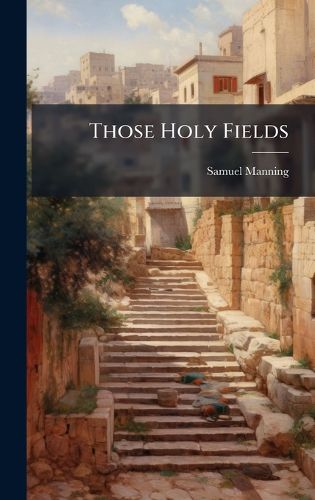
"Those Holy Fields: Palestine, Illustrated by Pen and Pencil" offers a captivating glimpse into 19th-century Palestine through the eyes of Samuel Manning. This richly illustrated volume combines detailed prose with evocative sketches and engravings, bringing the historical and religious landscapes of the Holy Land to life.
Manning's work provides valuable insights into the region's topography, architecture, and cultural practices of the time, appealing to readers interested in history, religious studies, and travel literature. The book's enduring appeal lies in its ability to transport readers to a bygone era, offering a unique perspective on a land revered by many.
This work has been selected by scholars as being culturally important, and is part of the knowledge base of civilization as we know it. This work was reproduced from the original artifact, and remains as true to the original work as possible. Therefore, you will see the original copyright references, library stamps (as most of these works have been housed in our most important libraries around the world), and other notations in the work.
This work is in the public domain in the United States of America, and possibly other nations. Within the United States, you may freely copy and distribute this work, as no entity (individual or corporate) has a copyright on the body of the work.
As a reproduction of a historical artifact, this work may contain missing or blurred pages, poor pictures, errant marks, etc. Scholars believe, and we concur, that this work is important enough to be preserved, reproduced, and made generally available to the public. We appreciate your support of the preservation process, and thank you for being an important part of keeping this knowledge alive and relevant.
$9.00 standard shipping within Australia
FREE standard shipping within Australia for orders over $100.00
Express & International shipping calculated at checkout
Stock availability can be subject to change without notice. We recommend calling the shop or contacting our online team to check availability of low stock items. Please see our Shopping Online page for more details.
"Those Holy Fields: Palestine, Illustrated by Pen and Pencil" offers a captivating glimpse into 19th-century Palestine through the eyes of Samuel Manning. This richly illustrated volume combines detailed prose with evocative sketches and engravings, bringing the historical and religious landscapes of the Holy Land to life.
Manning's work provides valuable insights into the region's topography, architecture, and cultural practices of the time, appealing to readers interested in history, religious studies, and travel literature. The book's enduring appeal lies in its ability to transport readers to a bygone era, offering a unique perspective on a land revered by many.
This work has been selected by scholars as being culturally important, and is part of the knowledge base of civilization as we know it. This work was reproduced from the original artifact, and remains as true to the original work as possible. Therefore, you will see the original copyright references, library stamps (as most of these works have been housed in our most important libraries around the world), and other notations in the work.
This work is in the public domain in the United States of America, and possibly other nations. Within the United States, you may freely copy and distribute this work, as no entity (individual or corporate) has a copyright on the body of the work.
As a reproduction of a historical artifact, this work may contain missing or blurred pages, poor pictures, errant marks, etc. Scholars believe, and we concur, that this work is important enough to be preserved, reproduced, and made generally available to the public. We appreciate your support of the preservation process, and thank you for being an important part of keeping this knowledge alive and relevant.
Search our extensive online catalogue.
