Readings Newsletter
Become a Readings Member to make your shopping experience even easier.
Sign in or sign up for free!
You’re not far away from qualifying for FREE standard shipping within Australia
You’ve qualified for FREE standard shipping within Australia
The cart is loading…


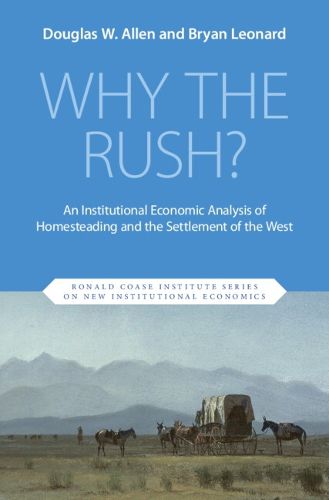
Establishing economic property rights is a ubiquitous human activity that is key to the creation of wealth. Why the Rush? combines economic and historical analysis to argue that the institution of homesteading, as established in the US through the Homestead Act of 1862, was a method to establish meaningful, economic property rights on the American frontier. It explains how homesteading rushed millions of people into specific areas, established a meaningful sovereignty without the use of military force and became the means by which the US Thwarted military and legal challenges. Using fine-grained data, along with a detailed theoretical analysis and exhaustive institutional content, this book makes a serious contribution to the study of economic property rights and institutions providing the definitive analysis of the economics of homesteading and its role in American economic history.
$9.00 standard shipping within Australia
FREE standard shipping within Australia for orders over $100.00
Express & International shipping calculated at checkout
Stock availability can be subject to change without notice. We recommend calling the shop or contacting our online team to check availability of low stock items. Please see our Shopping Online page for more details.
Establishing economic property rights is a ubiquitous human activity that is key to the creation of wealth. Why the Rush? combines economic and historical analysis to argue that the institution of homesteading, as established in the US through the Homestead Act of 1862, was a method to establish meaningful, economic property rights on the American frontier. It explains how homesteading rushed millions of people into specific areas, established a meaningful sovereignty without the use of military force and became the means by which the US Thwarted military and legal challenges. Using fine-grained data, along with a detailed theoretical analysis and exhaustive institutional content, this book makes a serious contribution to the study of economic property rights and institutions providing the definitive analysis of the economics of homesteading and its role in American economic history.
Search our extensive online catalogue.
