Readings Newsletter
Become a Readings Member to make your shopping experience even easier.
Sign in or sign up for free!
You’re not far away from qualifying for FREE standard shipping within Australia
You’ve qualified for FREE standard shipping within Australia
The cart is loading…


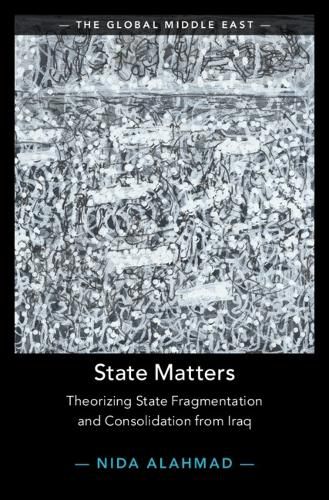
Why does the state matter to its people? How do people know and experience the state? And how did the state come to be both desired and dreaded by its subjects? This study offers a historically grounded social theoretical account of state consolidation in Iraq, from the foundation of the country as a League of Nations British Mandate in 1921 through to the post-2003 era. Through analysis of key historical episodes of state consolidation (and fragmentation) during the past century, Nida Alahmad argues that consolidation rests on two sequential and interdependent factors. First, domination: the state's capacity to dominate land and population. Second, legitimation: whereby the state is accepted and expected by the population to be the final arbitrator of collective life based on common principles. Moving between intellectual traditions and disciplines, Alahmad demonstrates that a theorization of state consolidation is a theorization of the modern state.
$9.00 standard shipping within Australia
FREE standard shipping within Australia for orders over $100.00
Express & International shipping calculated at checkout
Stock availability can be subject to change without notice. We recommend calling the shop or contacting our online team to check availability of low stock items. Please see our Shopping Online page for more details.
Why does the state matter to its people? How do people know and experience the state? And how did the state come to be both desired and dreaded by its subjects? This study offers a historically grounded social theoretical account of state consolidation in Iraq, from the foundation of the country as a League of Nations British Mandate in 1921 through to the post-2003 era. Through analysis of key historical episodes of state consolidation (and fragmentation) during the past century, Nida Alahmad argues that consolidation rests on two sequential and interdependent factors. First, domination: the state's capacity to dominate land and population. Second, legitimation: whereby the state is accepted and expected by the population to be the final arbitrator of collective life based on common principles. Moving between intellectual traditions and disciplines, Alahmad demonstrates that a theorization of state consolidation is a theorization of the modern state.
Search our extensive online catalogue.
