Readings Newsletter
Become a Readings Member to make your shopping experience even easier.
Sign in or sign up for free!
You’re not far away from qualifying for FREE standard shipping within Australia
You’ve qualified for FREE standard shipping within Australia
The cart is loading…


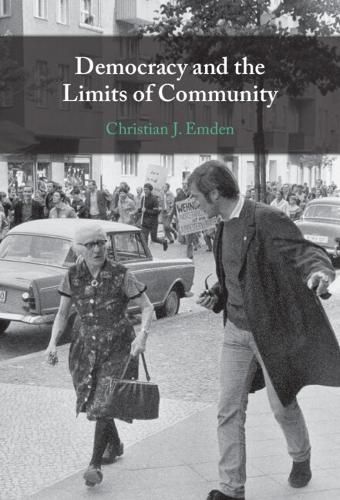
At a historical moment when democracy experiences a legitimation crisis, demands for 'community' and for a 'democracy of the common' have become central themes in political theory and philosophy on both sides of the Atlantic. Such appeals entail a critique, even a rejection, of liberal constitutional democracy as alienating and inauthentic, as not representing the interests of citizens. This book fundamentally questions the democratic potential of appeals to 'community' and 'the common.' The language of 'community' can be observed especially among conservative and neofascist public intellectuals of the New Right, but it also features surprisingly prominently among post-Marxist philosophers and political theorists of the New Left. Tracing 'community' and 'the common' in contemporary political thought and philosophy, this book argues that they represent a dangerous political romanticism and authoritarian drift incompatible with the normative demands and the emancipatory dimension of liberal constitutional democracy.
$9.00 standard shipping within Australia
FREE standard shipping within Australia for orders over $100.00
Express & International shipping calculated at checkout
Stock availability can be subject to change without notice. We recommend calling the shop or contacting our online team to check availability of low stock items. Please see our Shopping Online page for more details.
At a historical moment when democracy experiences a legitimation crisis, demands for 'community' and for a 'democracy of the common' have become central themes in political theory and philosophy on both sides of the Atlantic. Such appeals entail a critique, even a rejection, of liberal constitutional democracy as alienating and inauthentic, as not representing the interests of citizens. This book fundamentally questions the democratic potential of appeals to 'community' and 'the common.' The language of 'community' can be observed especially among conservative and neofascist public intellectuals of the New Right, but it also features surprisingly prominently among post-Marxist philosophers and political theorists of the New Left. Tracing 'community' and 'the common' in contemporary political thought and philosophy, this book argues that they represent a dangerous political romanticism and authoritarian drift incompatible with the normative demands and the emancipatory dimension of liberal constitutional democracy.
Search our extensive online catalogue.
