Readings Newsletter
Become a Readings Member to make your shopping experience even easier.
Sign in or sign up for free!
You’re not far away from qualifying for FREE standard shipping within Australia
You’ve qualified for FREE standard shipping within Australia
The cart is loading…


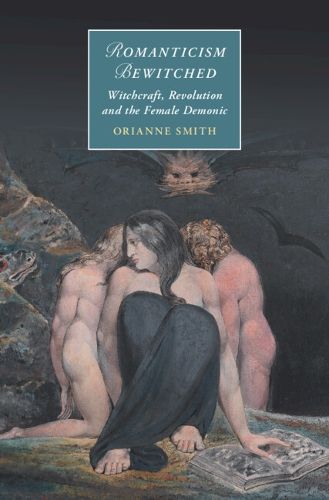
The Romantic-era witch was a remarkably flexible symbol of political and social disorder. The then-recent seventeenth-century witch hunts had already revealed deep anxieties about the subversive potential of women, and the witches who stalk the pages of Gothic poetry and prose or glare menacingly from works of art by Henry Fuseli and William Blake embody revolutionary anger and the possibility of radical social transformation. Despite the fears surrounding such figures, however, the Romantic period also saw witchcraft open up in conceptually new ways, enabling writers and artists to envision alternative means of interacting in the world that were not predicated on the subordination of women and other marginalized groups. Here, Orianne Smith embarks on an interdisciplinary reimagining of witchcraft, women's writing, religion, and social reform, providing original insights on the history of witchcraft and its influence on public discourse, literature and art.
$9.00 standard shipping within Australia
FREE standard shipping within Australia for orders over $100.00
Express & International shipping calculated at checkout
Stock availability can be subject to change without notice. We recommend calling the shop or contacting our online team to check availability of low stock items. Please see our Shopping Online page for more details.
The Romantic-era witch was a remarkably flexible symbol of political and social disorder. The then-recent seventeenth-century witch hunts had already revealed deep anxieties about the subversive potential of women, and the witches who stalk the pages of Gothic poetry and prose or glare menacingly from works of art by Henry Fuseli and William Blake embody revolutionary anger and the possibility of radical social transformation. Despite the fears surrounding such figures, however, the Romantic period also saw witchcraft open up in conceptually new ways, enabling writers and artists to envision alternative means of interacting in the world that were not predicated on the subordination of women and other marginalized groups. Here, Orianne Smith embarks on an interdisciplinary reimagining of witchcraft, women's writing, religion, and social reform, providing original insights on the history of witchcraft and its influence on public discourse, literature and art.
Search our extensive online catalogue.
