Readings Newsletter
Become a Readings Member to make your shopping experience even easier.
Sign in or sign up for free!
You’re not far away from qualifying for FREE standard shipping within Australia
You’ve qualified for FREE standard shipping within Australia
The cart is loading…


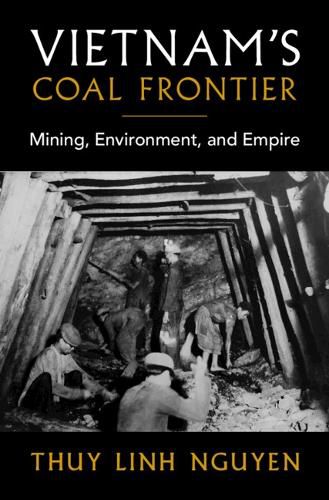
In one of the first energy histories of Southeast Asia, Thuy Linh Nguyen explores the environmental, economic, and social history of large-scale coal mining in French colonial Vietnam. Focusing on the Qu?ng Yen coal basin in northern Vietnam, known for the world's largest anthracite coal mines, this deeply researched study demonstrates how mining came to dominate the landscape, restructuring the region's environment and upending local communities. Nguyen pays particular attention to the role of various non-state local actors, often underrepresented in grand narratives of modern Vietnam, including Vietnamese and Chinese migrant mine workers, timber traders, loggers, and local ethnic minorities. Breaking away from the metropole-colony paradigm, Nguyen offers a new lens through which to explore the dynamics of colonial rule and the importance of inter-Asian networks, arguing that the colonial energy regime must be understood as a complex, multilayered interaction between empire, capital, labor, water, sea, land, and timber forests.
$9.00 standard shipping within Australia
FREE standard shipping within Australia for orders over $100.00
Express & International shipping calculated at checkout
Stock availability can be subject to change without notice. We recommend calling the shop or contacting our online team to check availability of low stock items. Please see our Shopping Online page for more details.
In one of the first energy histories of Southeast Asia, Thuy Linh Nguyen explores the environmental, economic, and social history of large-scale coal mining in French colonial Vietnam. Focusing on the Qu?ng Yen coal basin in northern Vietnam, known for the world's largest anthracite coal mines, this deeply researched study demonstrates how mining came to dominate the landscape, restructuring the region's environment and upending local communities. Nguyen pays particular attention to the role of various non-state local actors, often underrepresented in grand narratives of modern Vietnam, including Vietnamese and Chinese migrant mine workers, timber traders, loggers, and local ethnic minorities. Breaking away from the metropole-colony paradigm, Nguyen offers a new lens through which to explore the dynamics of colonial rule and the importance of inter-Asian networks, arguing that the colonial energy regime must be understood as a complex, multilayered interaction between empire, capital, labor, water, sea, land, and timber forests.
Search our extensive online catalogue.
