Readings Newsletter
Become a Readings Member to make your shopping experience even easier.
Sign in or sign up for free!
You’re not far away from qualifying for FREE standard shipping within Australia
You’ve qualified for FREE standard shipping within Australia
The cart is loading…


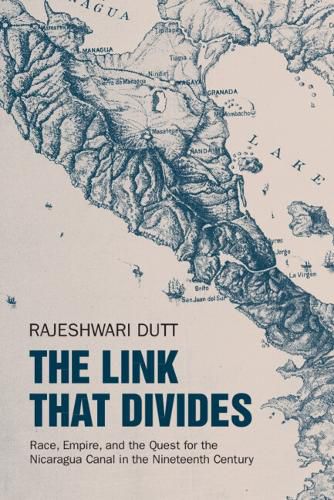
This important book illuminates the deeply intertwined histories of the Nicaragua Canal and the Afro-Indigenous Mosquito Coast, uncovering a compelling truth, long overshadowed by the triumphalist narrative of the Panama Canal. Focusing on British and US efforts to control the canal route through Nicaragua, Rajeshwari Dutt shows how imperial ambition, racial ideology, and local power struggles shaped one of Latin America's most contested infrastructure projects. She traces the role of racial language in imperial, colonial, and national agendas; the shifting dynamics of Anglo-American imperialism on the Mosquito Coast; and the violence embedded in the very pursuit of interoceanic connection. Methodologically, the book advances a practice of reading failure as a lens through which to understand the fragility of imperial projects and the contradictions that undermine their global ambitions. At its heart, The Link That Divides reveals a central paradox: that dreams of connection were built on - and undone by - the reality of division and exclusion.
$9.00 standard shipping within Australia
FREE standard shipping within Australia for orders over $100.00
Express & International shipping calculated at checkout
Stock availability can be subject to change without notice. We recommend calling the shop or contacting our online team to check availability of low stock items. Please see our Shopping Online page for more details.
This important book illuminates the deeply intertwined histories of the Nicaragua Canal and the Afro-Indigenous Mosquito Coast, uncovering a compelling truth, long overshadowed by the triumphalist narrative of the Panama Canal. Focusing on British and US efforts to control the canal route through Nicaragua, Rajeshwari Dutt shows how imperial ambition, racial ideology, and local power struggles shaped one of Latin America's most contested infrastructure projects. She traces the role of racial language in imperial, colonial, and national agendas; the shifting dynamics of Anglo-American imperialism on the Mosquito Coast; and the violence embedded in the very pursuit of interoceanic connection. Methodologically, the book advances a practice of reading failure as a lens through which to understand the fragility of imperial projects and the contradictions that undermine their global ambitions. At its heart, The Link That Divides reveals a central paradox: that dreams of connection were built on - and undone by - the reality of division and exclusion.
Search our extensive online catalogue.
