Readings Newsletter
Become a Readings Member to make your shopping experience even easier.
Sign in or sign up for free!
You’re not far away from qualifying for FREE standard shipping within Australia
You’ve qualified for FREE standard shipping within Australia
The cart is loading…


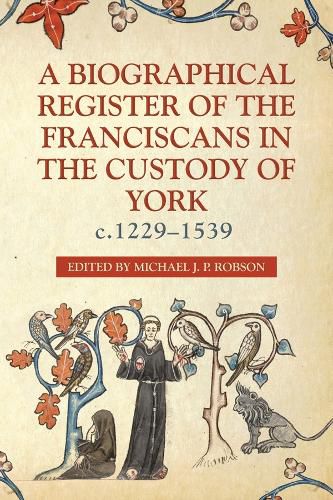
The Franciscans, frequently known as Greyfriars, were inspired by the charismatic figure of Francis of Assisi (+1226). Pledged to a life of penitence and evangelical poverty, they strove to bring Christianity to life through theirexample and preaching. In the late summer of 1224 they reached England, where they quickly established a presence at Canterbury, London, Oxford and Northampton. Attracting a large number of recruits from the universities, the regular and secular clergy and laymen, they spread rapidly throughout the country, establishing communities in the cities and principal boroughs. The custody of York, with its friaries of Beverley, Boston, Doncaster, Grimsby, Lincoln, Scarborough and York, a regional cluster, began with the friars’ arrival in the cathedral cities of Lincoln and York before 1230. The custody reached from Whitby to Spalding.
Although several monastic ruins adorn the landscape of northern Lincolnshire and much of Yorkshire, the seven friaries have left little visible trace, and there are few vestiges of the friars’ once teeming archives and impressive libraries. However, despite the dispersal of these documents, there are other sources which illuminate the friars’ ministry and shine a spotlight upon an individual friar. This biographical register of 1,704 friars draws upon a range of materials, including the wardrobe accounts, the episcopal registers, papal documents the probate registers, urban records, chronicles and diverse sources, illuminating their daily lives and activities, from studying the liberal arts and theology to celebrating Mass andhearing confessions. While some friars are represented by a single entry, other lives are better chronicled, particularly those who were active in the universities, the service of the crown and the local community.
MICHAEL ROBSON is a fellow of St Edmund’s College, Cambridge.
$9.00 standard shipping within Australia
FREE standard shipping within Australia for orders over $100.00
Express & International shipping calculated at checkout
Stock availability can be subject to change without notice. We recommend calling the shop or contacting our online team to check availability of low stock items. Please see our Shopping Online page for more details.
The Franciscans, frequently known as Greyfriars, were inspired by the charismatic figure of Francis of Assisi (+1226). Pledged to a life of penitence and evangelical poverty, they strove to bring Christianity to life through theirexample and preaching. In the late summer of 1224 they reached England, where they quickly established a presence at Canterbury, London, Oxford and Northampton. Attracting a large number of recruits from the universities, the regular and secular clergy and laymen, they spread rapidly throughout the country, establishing communities in the cities and principal boroughs. The custody of York, with its friaries of Beverley, Boston, Doncaster, Grimsby, Lincoln, Scarborough and York, a regional cluster, began with the friars’ arrival in the cathedral cities of Lincoln and York before 1230. The custody reached from Whitby to Spalding.
Although several monastic ruins adorn the landscape of northern Lincolnshire and much of Yorkshire, the seven friaries have left little visible trace, and there are few vestiges of the friars’ once teeming archives and impressive libraries. However, despite the dispersal of these documents, there are other sources which illuminate the friars’ ministry and shine a spotlight upon an individual friar. This biographical register of 1,704 friars draws upon a range of materials, including the wardrobe accounts, the episcopal registers, papal documents the probate registers, urban records, chronicles and diverse sources, illuminating their daily lives and activities, from studying the liberal arts and theology to celebrating Mass andhearing confessions. While some friars are represented by a single entry, other lives are better chronicled, particularly those who were active in the universities, the service of the crown and the local community.
MICHAEL ROBSON is a fellow of St Edmund’s College, Cambridge.
Search our extensive online catalogue.
