Readings Newsletter
Become a Readings Member to make your shopping experience even easier.
Sign in or sign up for free!
You’re not far away from qualifying for FREE standard shipping within Australia
You’ve qualified for FREE standard shipping within Australia
The cart is loading…


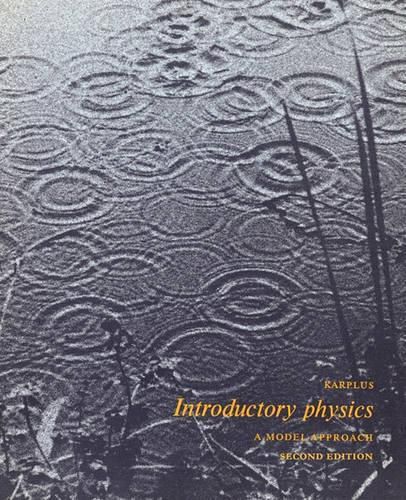
A basic, non-mathematical textbook for non-science students in secondary school or college. The book is based on Robert Karplus’ many years of research on how beginners think about physics. In the modeling approach students explore and test simple analog, working and mathematical models for physical phenomena. The models provide a clear, understandable transition to the key principles and theories of physics. The book begins with the basic concepts of relative motion, reference frames, interaction, systems, and a descriptive overview of energy transfer. Subsequent chapters develop the details of temperature and heat, thermal (internal) energy, forces and work, electrical energy and electrical circuits, velocity and acceleration, Newton’s Laws, motion near the surface of the earth, periodic and circular motion, celestial mechanics and gravity, pressure and kinetic theory, light and sound, waves, and modern physics (Bohr model and the basics of quantum mechanics). The Modeling Instruction approach is used in secondary schools throughout the US (see modeling.asu.edu). This book is especially useful in conjunction with (or as preparation for) the study of chemistry.
$9.00 standard shipping within Australia
FREE standard shipping within Australia for orders over $100.00
Express & International shipping calculated at checkout
Stock availability can be subject to change without notice. We recommend calling the shop or contacting our online team to check availability of low stock items. Please see our Shopping Online page for more details.
A basic, non-mathematical textbook for non-science students in secondary school or college. The book is based on Robert Karplus’ many years of research on how beginners think about physics. In the modeling approach students explore and test simple analog, working and mathematical models for physical phenomena. The models provide a clear, understandable transition to the key principles and theories of physics. The book begins with the basic concepts of relative motion, reference frames, interaction, systems, and a descriptive overview of energy transfer. Subsequent chapters develop the details of temperature and heat, thermal (internal) energy, forces and work, electrical energy and electrical circuits, velocity and acceleration, Newton’s Laws, motion near the surface of the earth, periodic and circular motion, celestial mechanics and gravity, pressure and kinetic theory, light and sound, waves, and modern physics (Bohr model and the basics of quantum mechanics). The Modeling Instruction approach is used in secondary schools throughout the US (see modeling.asu.edu). This book is especially useful in conjunction with (or as preparation for) the study of chemistry.
Search our extensive online catalogue.
