Readings Newsletter
Become a Readings Member to make your shopping experience even easier.
Sign in or sign up for free!
You’re not far away from qualifying for FREE standard shipping within Australia
You’ve qualified for FREE standard shipping within Australia
The cart is loading…


This title is printed to order. This book may have been self-published. If so, we cannot guarantee the quality of the content. In the main most books will have gone through the editing process however some may not. We therefore suggest that you be aware of this before ordering this book. If in doubt check either the author or publisher’s details as we are unable to accept any returns unless they are faulty. Please contact us if you have any questions.
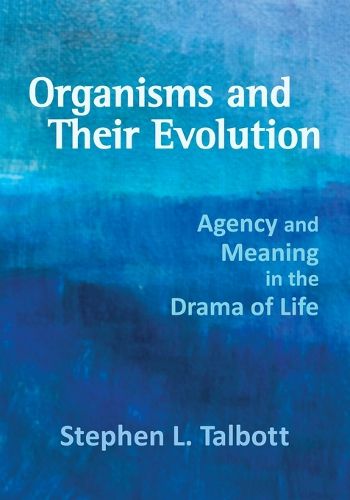
Every organism is a striving agent. It insistently pursues its own meanings and purposes in the manner of its species. This is true, not only of animal behavior (as seen in our pets), but all the way down to the molecular and cellular levels. Whether a cell is dividing - becoming two cells, with each daughter cell re-organizing itself as a living entity - or replicating its DNA, or carrying out the infinitely varying work of metabolism, it is always directing its activity with a remarkable wisdom. Is this future-oriented organizing ability really irrelevant to evolution, as so many seem to think today?
During much of the 20th century, biologists, bound by the repressive doctrine of Behaviorism, could not speak of the human mind. And when, during the last decades of the century, the taboo was finally shattered, it gave rise to what is now called the "Cognitive Revolution," and along with it an invigorating renewal of consciousness studies. When biologists break through the taboo against reckoning with their own descriptive language of meaning and purpose - when they can openly acknowledge every organism's agency, as they are showing early signs of doing today - the consequences for our understanding of biology and evolution may dwarf those of the Cognitive Revolution. These consequences are what this book is about.
$9.00 standard shipping within Australia
FREE standard shipping within Australia for orders over $100.00
Express & International shipping calculated at checkout
Stock availability can be subject to change without notice. We recommend calling the shop or contacting our online team to check availability of low stock items. Please see our Shopping Online page for more details.
This title is printed to order. This book may have been self-published. If so, we cannot guarantee the quality of the content. In the main most books will have gone through the editing process however some may not. We therefore suggest that you be aware of this before ordering this book. If in doubt check either the author or publisher’s details as we are unable to accept any returns unless they are faulty. Please contact us if you have any questions.
Every organism is a striving agent. It insistently pursues its own meanings and purposes in the manner of its species. This is true, not only of animal behavior (as seen in our pets), but all the way down to the molecular and cellular levels. Whether a cell is dividing - becoming two cells, with each daughter cell re-organizing itself as a living entity - or replicating its DNA, or carrying out the infinitely varying work of metabolism, it is always directing its activity with a remarkable wisdom. Is this future-oriented organizing ability really irrelevant to evolution, as so many seem to think today?
During much of the 20th century, biologists, bound by the repressive doctrine of Behaviorism, could not speak of the human mind. And when, during the last decades of the century, the taboo was finally shattered, it gave rise to what is now called the "Cognitive Revolution," and along with it an invigorating renewal of consciousness studies. When biologists break through the taboo against reckoning with their own descriptive language of meaning and purpose - when they can openly acknowledge every organism's agency, as they are showing early signs of doing today - the consequences for our understanding of biology and evolution may dwarf those of the Cognitive Revolution. These consequences are what this book is about.
Search our extensive online catalogue.
