


Codependency in the Workplace: A Guide for Employee Assistance and Human Resource Professionals
Seth Allcorn
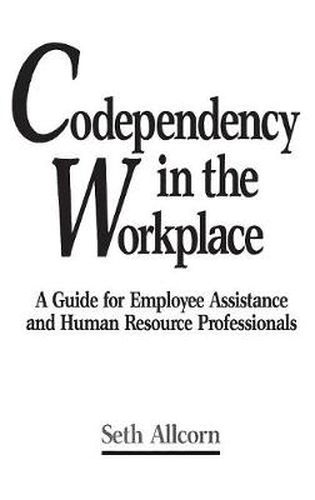
Codependency in the Workplace: A Guide for Employee Assistance and Human Resource Professionals
Seth Allcorn
Codependency is an important psychological aspect of the workplace that adversely affects both those who experience codependency and those who are the subject of the codependent’s compelling agenda of interpersonal control. In this book, Seth Allcorn explores codependency in the workplace beginning with its origins in the family. Many new insights are provided about the characteristic self-defeating and paradoxical patterns provided of thinking, feeling, and action that also impoverish those who work with the codependent. The author develops important theoretical pespectives and models of codependency by drawing upon psychoanalytic theory. The three faces of codependency are described for the first time and a sophisticated psychodynamic model of the psychological gridlock of codependency explains the codependent’s self-defeating and interpersonally destructive agenda of control. Allcorn concludes his book with ideas about how managers can deal more effectively with the presence of codependency in their organization. The author begins by defining codependency and uses a model to explain how it arises in pathological families of origin. He then describes three faces of codependency and relates them to 14 common behaviour attributes and the workplace. Allcorn explores how this disorder manifests itself in different genders and situations, outlines a learning model and a family pathology matrix, and shows how different pairings of parental behaviour contribute to the development of the three faces of codependency. The focus, and the book, concludes with a search for solutions within the organizational culture that may alleviate the need for codependent defenses and lead to one-on-one interventions at work. This book should be of interest to employee assistance staff, training personnel, counsellors and therapists, consultations, and students of the psychodynamics of organizational life.
This item is not currently in-stock. It can be ordered online and is expected to ship in approx 2 weeks
Our stock data is updated periodically, and availability may change throughout the day for in-demand items. Please call the relevant shop for the most current stock information. Prices are subject to change without notice.
Sign in or become a Readings Member to add this title to a wishlist.