Readings Newsletter
Become a Readings Member to make your shopping experience even easier.
Sign in or sign up for free!
You’re not far away from qualifying for FREE standard shipping within Australia
You’ve qualified for FREE standard shipping within Australia
The cart is loading…


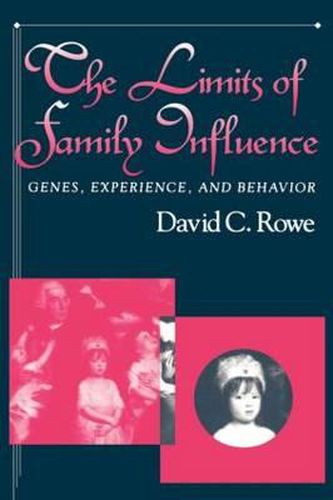
Most parents believe that their child’s personality and intellectual development is a direct result of their child-rearing practices and home environment. This belief is supported by many social scientists who contend that the influences of nature and nurture are inseparable. Challenging such universally accepted assumptions, The Limits of Family Influence argues that socialization science has placed too heavy an emphasis on the family as the bearer of culture. Similarly, it reveals how the environmental variables most often named in socialization science–such as social class, parental warmth, and one- versus two-parent households–may also be empty of causal influence on child outcomes such as intelligence, personality, and psychopathology.
$9.00 standard shipping within Australia
FREE standard shipping within Australia for orders over $100.00
Express & International shipping calculated at checkout
Stock availability can be subject to change without notice. We recommend calling the shop or contacting our online team to check availability of low stock items. Please see our Shopping Online page for more details.
Most parents believe that their child’s personality and intellectual development is a direct result of their child-rearing practices and home environment. This belief is supported by many social scientists who contend that the influences of nature and nurture are inseparable. Challenging such universally accepted assumptions, The Limits of Family Influence argues that socialization science has placed too heavy an emphasis on the family as the bearer of culture. Similarly, it reveals how the environmental variables most often named in socialization science–such as social class, parental warmth, and one- versus two-parent households–may also be empty of causal influence on child outcomes such as intelligence, personality, and psychopathology.
Search our extensive online catalogue.
