Readings Newsletter
Become a Readings Member to make your shopping experience even easier.
Sign in or sign up for free!
You’re not far away from qualifying for FREE standard shipping within Australia
You’ve qualified for FREE standard shipping within Australia
The cart is loading…


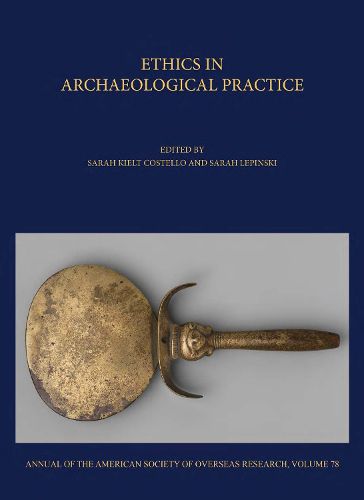
Ethics in Archaeological Practice explores urgent topics and issues in archaeology as currently practised in the classroom, the field, the museum and the public sphere. While addressed primarily to archaeologists working in western Asia, the eastern Mediterranean and North Africa, the volume raises contemporary ethical questions around race, gender, disability, climate change and cultural heritage that are pressing and relevant to archaeology students and professionals worldwide.
The fifteen contributors offer fundamental case studies and practical guidance for best practices and models of high standards of ethical practice in professional conduct. Together, they offer new approaches to advocacy and the responsible stewardship of heritage sites, collections, and the environment.
These compelling and generative discussions make the case for a 21st century archaeology that is proactive and engaged with discourses addressing equity, social justice, anti-colonialism and climate change.
$9.00 standard shipping within Australia
FREE standard shipping within Australia for orders over $100.00
Express & International shipping calculated at checkout
Stock availability can be subject to change without notice. We recommend calling the shop or contacting our online team to check availability of low stock items. Please see our Shopping Online page for more details.
Ethics in Archaeological Practice explores urgent topics and issues in archaeology as currently practised in the classroom, the field, the museum and the public sphere. While addressed primarily to archaeologists working in western Asia, the eastern Mediterranean and North Africa, the volume raises contemporary ethical questions around race, gender, disability, climate change and cultural heritage that are pressing and relevant to archaeology students and professionals worldwide.
The fifteen contributors offer fundamental case studies and practical guidance for best practices and models of high standards of ethical practice in professional conduct. Together, they offer new approaches to advocacy and the responsible stewardship of heritage sites, collections, and the environment.
These compelling and generative discussions make the case for a 21st century archaeology that is proactive and engaged with discourses addressing equity, social justice, anti-colonialism and climate change.
Search our extensive online catalogue.
