Readings Newsletter
Become a Readings Member to make your shopping experience even easier.
Sign in or sign up for free!
You’re not far away from qualifying for FREE standard shipping within Australia
You’ve qualified for FREE standard shipping within Australia
The cart is loading…


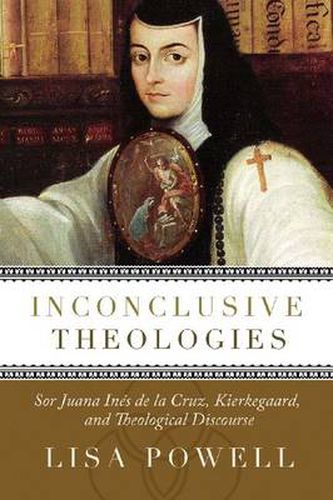
Kierkegaard argued that Christianity is a lived religion, not a set of doctrines to be cognitively affirmed. This means theology’s proper focus is reflection on revelation within the God-human relationship, and human existence-always in process and shaped by different communities, relationships, and contexts-is significant to theological construction. As Christian knowledge is a relationship that cannot be communicated directly, theology is never concluded and cannot adequately function within totalizing systems.
The writings of seventeenth-century Mexican nun, Sor Juana Ines de la Cruz, provide an exemplary direction for contemporary theologies mindful of this need for indirect communication. Her writings show a respect of others’ cognitive freedom and their differing contexts and perspectives. Utilizing the religious work of this woman from Mexico’s colonial past, Powell builds a theological case for the inclusion of literary genres in the theological discipline, a move that resists western philosophy’s dominance of form and opens the theological canon.
The field of theology has witnessed a significant shift toward the perspectives of those outside dominant Western culture; in addition to featuring such a perspective through highlighting the work of this subaltern woman, this work provides additional methodological groundwork for this continued pursuit. Powell maintains that the genres Sor Juana employs-poetry, drama, and epistle-are especially appropriate for the communication of Christian knowledge. This book serves as a proposal for open forms of theological discourse marked by the limits of religious understanding emerging from human difference. Theology’s reflection, then, can be understood anew as a theology within the limits of the inconclusive.
$9.00 standard shipping within Australia
FREE standard shipping within Australia for orders over $100.00
Express & International shipping calculated at checkout
Stock availability can be subject to change without notice. We recommend calling the shop or contacting our online team to check availability of low stock items. Please see our Shopping Online page for more details.
Kierkegaard argued that Christianity is a lived religion, not a set of doctrines to be cognitively affirmed. This means theology’s proper focus is reflection on revelation within the God-human relationship, and human existence-always in process and shaped by different communities, relationships, and contexts-is significant to theological construction. As Christian knowledge is a relationship that cannot be communicated directly, theology is never concluded and cannot adequately function within totalizing systems.
The writings of seventeenth-century Mexican nun, Sor Juana Ines de la Cruz, provide an exemplary direction for contemporary theologies mindful of this need for indirect communication. Her writings show a respect of others’ cognitive freedom and their differing contexts and perspectives. Utilizing the religious work of this woman from Mexico’s colonial past, Powell builds a theological case for the inclusion of literary genres in the theological discipline, a move that resists western philosophy’s dominance of form and opens the theological canon.
The field of theology has witnessed a significant shift toward the perspectives of those outside dominant Western culture; in addition to featuring such a perspective through highlighting the work of this subaltern woman, this work provides additional methodological groundwork for this continued pursuit. Powell maintains that the genres Sor Juana employs-poetry, drama, and epistle-are especially appropriate for the communication of Christian knowledge. This book serves as a proposal for open forms of theological discourse marked by the limits of religious understanding emerging from human difference. Theology’s reflection, then, can be understood anew as a theology within the limits of the inconclusive.
Search our extensive online catalogue.
