Readings Newsletter
Become a Readings Member to make your shopping experience even easier.
Sign in or sign up for free!
You’re not far away from qualifying for FREE standard shipping within Australia
You’ve qualified for FREE standard shipping within Australia
The cart is loading…


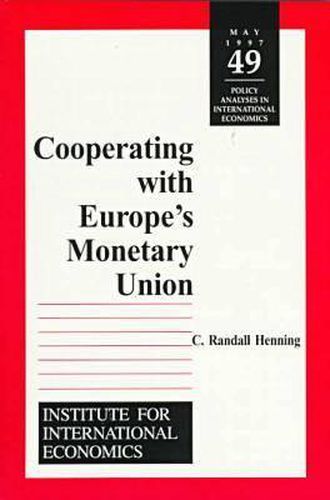
Europe’s monetary union will represent the most profound transformation of the international monetary system since the transition from fixed to flexible exchange rates in the early 1970s. It will compete with the erosion of American dominance and the dramatic increase in capital mobility for the distinction of being the most far-reaching change in the global monetary system since the Bretton Woods conference of 1944. Economic and Monetary Union (EMU) will create in Europe a new monetary actor with an economic size roughly comparable to the United States, ushering in a new era in international monetary relations. Nonetheless, while broad interests coincide, the creation of the monetary union will pose challenges to American, Japanese, and other non-European policymakers. Europe’s monetary union could prove to be a difficult partner in international monetary cooperation. Henning recommends that European institutions and policy processes be strengthened, representation of the monetary union in the G-7 be consolidated, and that European, American, and Japanese authorities cooperate to reduce instability during the transition to monetary union.
$9.00 standard shipping within Australia
FREE standard shipping within Australia for orders over $100.00
Express & International shipping calculated at checkout
Stock availability can be subject to change without notice. We recommend calling the shop or contacting our online team to check availability of low stock items. Please see our Shopping Online page for more details.
Europe’s monetary union will represent the most profound transformation of the international monetary system since the transition from fixed to flexible exchange rates in the early 1970s. It will compete with the erosion of American dominance and the dramatic increase in capital mobility for the distinction of being the most far-reaching change in the global monetary system since the Bretton Woods conference of 1944. Economic and Monetary Union (EMU) will create in Europe a new monetary actor with an economic size roughly comparable to the United States, ushering in a new era in international monetary relations. Nonetheless, while broad interests coincide, the creation of the monetary union will pose challenges to American, Japanese, and other non-European policymakers. Europe’s monetary union could prove to be a difficult partner in international monetary cooperation. Henning recommends that European institutions and policy processes be strengthened, representation of the monetary union in the G-7 be consolidated, and that European, American, and Japanese authorities cooperate to reduce instability during the transition to monetary union.
Search our extensive online catalogue.
