Readings Newsletter
Become a Readings Member to make your shopping experience even easier.
Sign in or sign up for free!
You’re not far away from qualifying for FREE standard shipping within Australia
You’ve qualified for FREE standard shipping within Australia
The cart is loading…


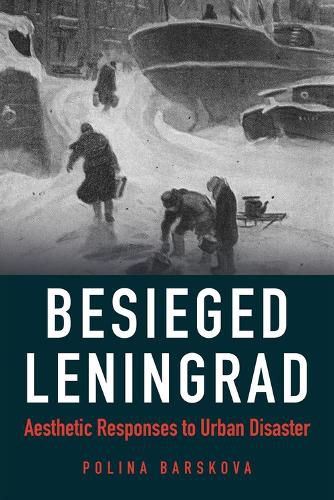
During the 872 days of the Siege of Leningrad (September 1941 to January 1944), the city’s inhabitants were surrounded by the military forces of Nazi Germany. They suffered famine, cold, and darkness, and a million people lost their lives, making the siege one of the most destructive in history. Confinement in the besieged city was a traumatic experience. Unlike the victims of the Auschwitz concentration camp, for example, who were brought from afar and robbed of their cultural roots, the victims of the Siege of Leningrad were trapped in the city as it underwent a slow, horrific transformation. They lost everything except their physical location, which was layered with historical, cultural, and personal memory. In Besieged Leningrad, Polina Barskova examines how the city’s inhabitants adjusted to their new urban reality, focusing on the emergence of new spatial perceptions that fostered the production of diverse textual and visual representations. The myriad texts that emerged during the siege were varied and exciting, engendered by sometimes sharply conflicting ideological urges and aesthetic sensibilities. In this first study of the cultural and literary representations of spatiality in besieged Leningrad, Barskova examines a wide range of authors with competing views of their difficult relationship with the city, filling a gap in Western knowledge of the culture of the siege. It will appeal to Russian studies specialists as well as those interested in war testimonies and the representation of trauma.
$9.00 standard shipping within Australia
FREE standard shipping within Australia for orders over $100.00
Express & International shipping calculated at checkout
Stock availability can be subject to change without notice. We recommend calling the shop or contacting our online team to check availability of low stock items. Please see our Shopping Online page for more details.
During the 872 days of the Siege of Leningrad (September 1941 to January 1944), the city’s inhabitants were surrounded by the military forces of Nazi Germany. They suffered famine, cold, and darkness, and a million people lost their lives, making the siege one of the most destructive in history. Confinement in the besieged city was a traumatic experience. Unlike the victims of the Auschwitz concentration camp, for example, who were brought from afar and robbed of their cultural roots, the victims of the Siege of Leningrad were trapped in the city as it underwent a slow, horrific transformation. They lost everything except their physical location, which was layered with historical, cultural, and personal memory. In Besieged Leningrad, Polina Barskova examines how the city’s inhabitants adjusted to their new urban reality, focusing on the emergence of new spatial perceptions that fostered the production of diverse textual and visual representations. The myriad texts that emerged during the siege were varied and exciting, engendered by sometimes sharply conflicting ideological urges and aesthetic sensibilities. In this first study of the cultural and literary representations of spatiality in besieged Leningrad, Barskova examines a wide range of authors with competing views of their difficult relationship with the city, filling a gap in Western knowledge of the culture of the siege. It will appeal to Russian studies specialists as well as those interested in war testimonies and the representation of trauma.
Search our extensive online catalogue.
